Word Explanation
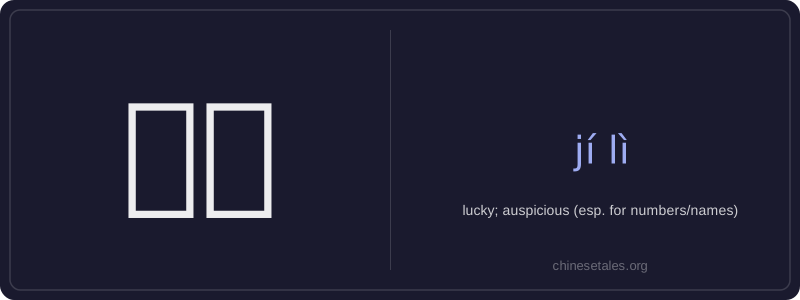
吉利 (jí lì) is an adjective meaning 'lucky' or 'auspicious', especially in contexts involving numbers, names, dates, or symbols believed to bring good fortune. The character 吉 (jí) means 'auspicious' or 'fortunate', while 利 (lì) conveys 'advantageous', 'profitable', or 'beneficial'. Together, they form a compound emphasizing positive, favorable outcomes—often tied to traditional Chinese beliefs about harmony, prosperity, and avoiding misfortune.
This word is commonly used in everyday life: people choose phone numbers or license plates with repeating digits like 6 or 8 because they’re considered 吉利; businesses open on dates deemed 吉利; and red envelopes may include money amounts ending in 8 (e.g., ¥88 or ¥168) for their 吉利 connotation. It’s not used for general 'luck' in personal events (e.g., passing an exam), where 运气 (yùnqi) is more appropriate—it’s specifically tied to symbolic or culturally sanctioned auspiciousness.
Example Sentences
Related Words
国语
‘Guó yǔ’ literally means 'national language'—
无论谁
‘无论谁’ (wú lùn shéi) is a pronoun meaning
外语
‘外语’ literally means ‘outside language’ —
不对
不对 (bù duì) literally combines 不 (bù), meani
我的
我的 (wǒ de) is a possessive pronoun meaning 'my'
违规
违规 (wéi guī) literally means 'to violate rules
亲笔
‘亲笔’ literally means ‘one’s own hand’—comb
面条
‘面条’ (miàn tiáo) literally means ‘flour str