Word Explanation
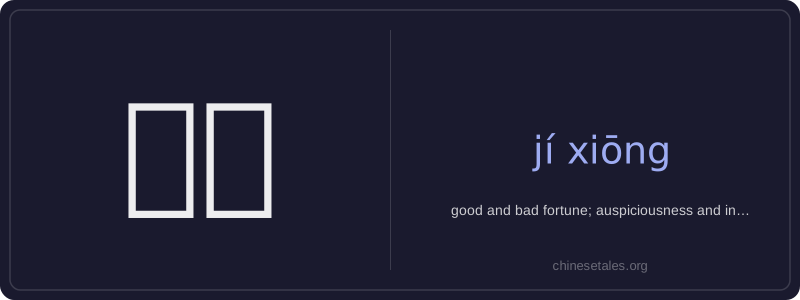
吉凶 is a classical compound noun meaning 'good and bad fortune' or 'auspiciousness and inauspiciousness.' It combines 吉 (jí), meaning 'lucky, auspicious, favorable,' and 凶 (xiōng), meaning 'inauspicious, ominous, calamitous.' Together, they form a balanced, yin-yang–style pair expressing the dual nature of fate—commonly used in contexts involving divination, traditional rituals, astrology, or folk beliefs about destiny.
The term appears frequently in formal, literary, or ritual language—not everyday casual speech—and often implies uncertainty or unpredictability about outcomes. You’ll encounter it in phrases like 吉凶未卜 (jí xiōng wèi bǔ, 'fortune unknown') or in classical texts, fortune-telling reports, and ceremonial announcements. Though each character can stand alone, 吉凶 functions as an inseparable lexical unit, almost always appearing together in fixed order (吉 first, 凶 second) and rarely modified by adjectives or particles.
Example Sentences
Related Words
国语
‘Guó yǔ’ literally means 'national language'—
无论谁
‘无论谁’ (wú lùn shéi) is a pronoun meaning
外语
‘外语’ literally means ‘outside language’ —
不对
不对 (bù duì) literally combines 不 (bù), meani
我的
我的 (wǒ de) is a possessive pronoun meaning 'my'
违规
违规 (wéi guī) literally means 'to violate rules
亲笔
‘亲笔’ literally means ‘one’s own hand’—comb
面条
‘面条’ (miàn tiáo) literally means ‘flour str