Word Explanation
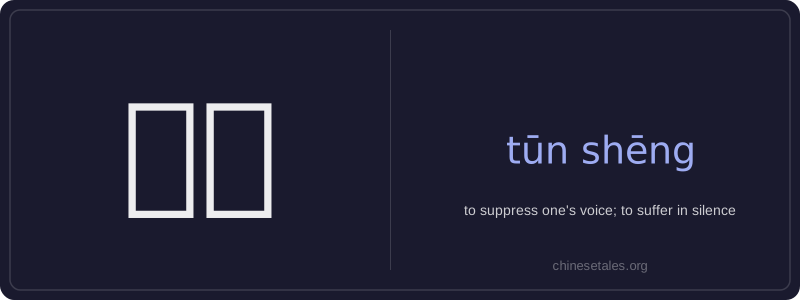
‘吞声’ literally means 'to swallow one’s voice'—a vivid metaphor for suppressing speech or emotion, especially in the face of injustice, sorrow, or power imbalance. The character 吞 (tūn) means 'to swallow', suggesting an active, internalized act of restraint; 声 (shēng) means 'voice' or 'sound', representing expression itself. Together, they evoke the physical and emotional effort of holding back tears, complaints, or protest.
This word is strongly associated with silent endurance, resignation, or dignified suffering—often implying unfairness or helplessness. It appears frequently in literary, historical, and formal contexts, such as classical poetry or modern essays describing oppression, grief, or social constraint. While it can describe individual restraint, it often carries a subtle moral weight: the speaker endures not out of indifference, but because speaking would be futile, dangerous, or inappropriate.
Example Sentences
Related Words
国语
‘Guó yǔ’ literally means 'national language'—
无论谁
‘无论谁’ (wú lùn shéi) is a pronoun meaning
外语
‘外语’ literally means ‘outside language’ —
不对
不对 (bù duì) literally combines 不 (bù), meani
我的
我的 (wǒ de) is a possessive pronoun meaning 'my'
违规
违规 (wéi guī) literally means 'to violate rules
亲笔
‘亲笔’ literally means ‘one’s own hand’—comb
面条
‘面条’ (miàn tiáo) literally means ‘flour str