Word Explanation
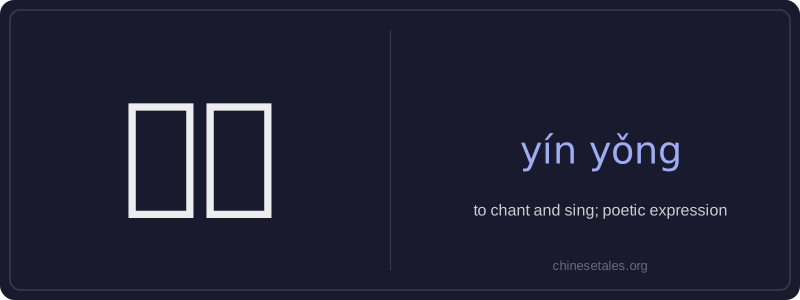
‘吟咏’ (yín yǒng) is a literary verb meaning to chant or recite poetry aloud with expressive intonation and rhythm — often implying deep feeling, reverence, or aesthetic appreciation. Though composed of two near-synonymous characters (吟 ‘to chant’ and 咏 ‘to sing/recite poetry’), together they form a compound that emphasizes the emotive, performative act of poetic utterance, not mere silent reading. It evokes classical Chinese poetic tradition, where scholars would recite verses while walking in nature or reflecting on life’s subtleties.
The word carries a refined, somewhat formal or literary register — it’s rarely used in casual speech but appears frequently in essays, historical dramas, literary criticism, and descriptions of cultural activities. It suggests both vocalization and emotional resonance: one doesn’t just say the words, but embodies their mood and imagery through tone, pace, and presence.
Example Sentences
Related Words
国语
‘Guó yǔ’ literally means 'national language'—
无论谁
‘无论谁’ (wú lùn shéi) is a pronoun meaning
外语
‘外语’ literally means ‘outside language’ —
不对
不对 (bù duì) literally combines 不 (bù), meani
我的
我的 (wǒ de) is a possessive pronoun meaning 'my'
违规
违规 (wéi guī) literally means 'to violate rules
亲笔
‘亲笔’ literally means ‘one’s own hand’—comb
面条
‘面条’ (miàn tiáo) literally means ‘flour str