Word Explanation
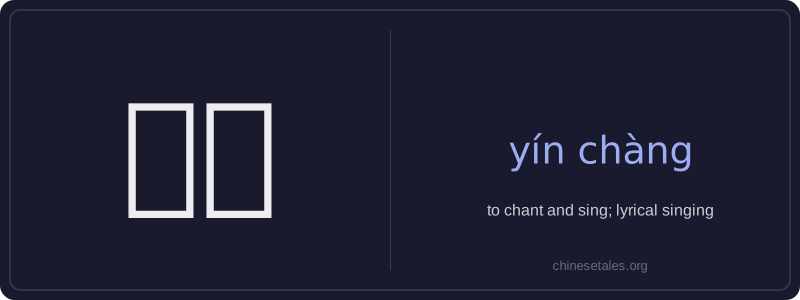
吟唱 (yín chàng) is a literary and expressive verb meaning 'to chant and sing'—often with poetic, melancholy, or reverent feeling. The first character 吟 (yín) means 'to chant softly, recite poetically', evoking classical Chinese poetry recitation; the second 唱 (chàng) means 'to sing'. Together, they emphasize lyrical, melodic vocalization that blends speech-like intonation with musical phrasing—not just singing a song, but embodying emotion through rhythmic, resonant voice.
This word appears frequently in descriptions of traditional performances, nature scenes (e.g., birds or wind 'singing'), or introspective moments in literature and film. It carries an elegant, slightly solemn register and is rarely used in casual speech. You’ll hear it in contexts involving poetry readings, folk ballads, Buddhist chanting, or even metaphorical uses like 'the river seems to吟唱 at dusk'—conveying harmony, nostalgia, or quiet beauty.
Example Sentences
Related Words
国语
‘Guó yǔ’ literally means 'national language'—
无论谁
‘无论谁’ (wú lùn shéi) is a pronoun meaning
外语
‘外语’ literally means ‘outside language’ —
不对
不对 (bù duì) literally combines 不 (bù), meani
我的
我的 (wǒ de) is a possessive pronoun meaning 'my'
违规
违规 (wéi guī) literally means 'to violate rules
亲笔
‘亲笔’ literally means ‘one’s own hand’—comb
面条
‘面条’ (miàn tiáo) literally means ‘flour str