Word Explanation
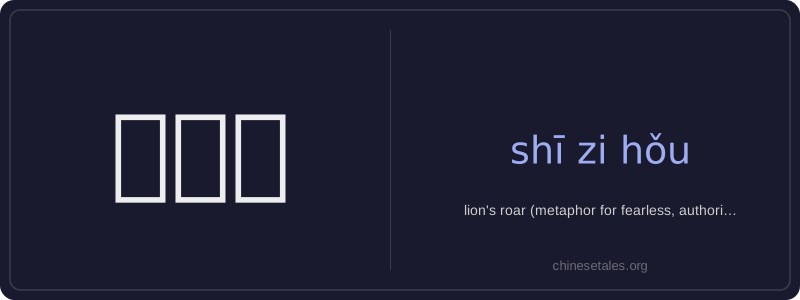
'Lion's roar' (shī zi hǒu) is a classical Chinese idiom rooted in Buddhist and literary tradition, where the lion symbolizes courage, authority, and unshakable truth. Literally, 狮 means 'lion', 子 is a grammatical suffix that forms nouns (here turning 'lion' into a noun phrase), and 吼 means 'to roar'. Together, the term evokes the powerful, commanding sound of a lion — not as literal animal behavior, but as a metaphor for bold, fearless, and morally grounded speech or action.
This expression appears frequently in formal or literary contexts: a teacher delivering an inspiring lecture, a leader speaking with conviction against injustice, or a scholar refuting falsehoods with clarity and strength. It carries positive connotations of moral courage and rhetorical power, never mere loudness or aggression. While rare in casual daily speech, it’s widely understood in educated circles and often used in essays, speeches, or media commentary to praise principled assertiveness.
Example Sentences
Related Words
国语
‘Guó yǔ’ literally means 'national language'—
无论谁
‘无论谁’ (wú lùn shéi) is a pronoun meaning
外语
‘外语’ literally means ‘outside language’ —
不对
不对 (bù duì) literally combines 不 (bù), meani
我的
我的 (wǒ de) is a possessive pronoun meaning 'my'
违规
违规 (wéi guī) literally means 'to violate rules
亲笔
‘亲笔’ literally means ‘one’s own hand’—comb
面条
‘面条’ (miàn tiáo) literally means ‘flour str