Word Explanation
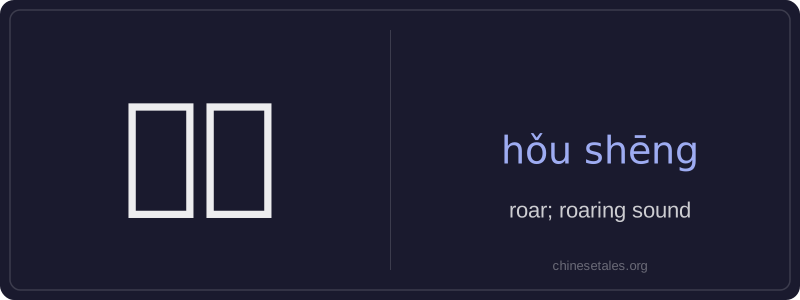
Hǒu shēng literally combines 吼 (hǒu), meaning 'to roar'—a loud, deep vocalization often made by large animals like lions or tigers—and 声 (shēng), meaning 'sound' or 'voice'. Together, they form a noun meaning 'roar' or 'roaring sound', emphasizing the auditory quality rather than the action itself. It’s commonly used to describe powerful, resonant sounds produced by animals, but can also refer to similarly intense human vocalizations, such as shouts of anger or protest.
This word appears frequently in descriptive writing, nature documentaries, and literature to evoke intensity, danger, or raw emotion. Unlike the verb 吼 (hǒu), which focuses on the act of roaring, 吼声 is strictly nominal and always refers to the resulting sound. It’s neutral in register but leans slightly literary or vivid—less common in casual speech than simpler terms like 叫声 ('cry') or 大喊 ('shout').
Example Sentences
Related Words
国语
‘Guó yǔ’ literally means 'national language'—
无论谁
‘无论谁’ (wú lùn shéi) is a pronoun meaning
外语
‘外语’ literally means ‘outside language’ —
不对
不对 (bù duì) literally combines 不 (bù), meani
我的
我的 (wǒ de) is a possessive pronoun meaning 'my'
违规
违规 (wéi guī) literally means 'to violate rules
亲笔
‘亲笔’ literally means ‘one’s own hand’—comb
面条
‘面条’ (miàn tiáo) literally means ‘flour str