Word Explanation
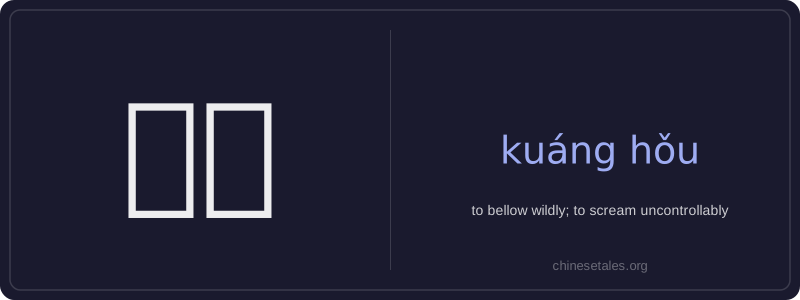
狂吼 literally combines 狂 (kuáng, 'wild', 'frenzied') and 吼 (hǒu, 'to roar' or 'to bellow'), resulting in a vivid verb meaning 'to bellow wildly' or 'to scream uncontrollably'. It conveys intense, unrestrained vocal expression—often associated with raw emotion like rage, terror, or overwhelming excitement. Unlike ordinary shouting (喊), 狂吼 implies loss of control, physical force, and emotional extremity.
This word is frequently used to describe animal sounds—especially large mammals like lions, bears, or wolves—but also applies to humans in heightened emotional states: a protestor screaming in defiance, a fan roaring at a concert, or someone yelling in panic. It carries strong imagery and dramatic weight, making it common in literature, film scripts, and expressive speech—not everyday conversation. The compound functions as a single verb and does not take aspectual particles (e.g., *了, 过) without careful context, as it already implies intensity and completion.
Example Sentences
Related Words
国语
‘Guó yǔ’ literally means 'national language'—
无论谁
‘无论谁’ (wú lùn shéi) is a pronoun meaning
外语
‘外语’ literally means ‘outside language’ —
不对
不对 (bù duì) literally combines 不 (bù), meani
我的
我的 (wǒ de) is a possessive pronoun meaning 'my'
违规
违规 (wéi guī) literally means 'to violate rules
亲笔
‘亲笔’ literally means ‘one’s own hand’—comb
面条
‘面条’ (miàn tiáo) literally means ‘flour str