Word Explanation
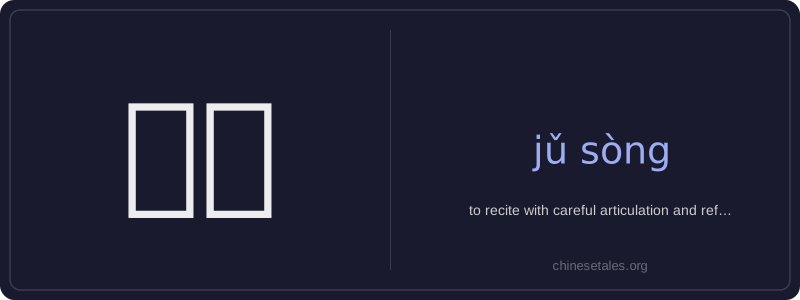
‘咀诵’ (jǔ sòng) is a literary, somewhat formal verb meaning to recite aloud with careful articulation and deep reflection—like savoring each word as one would chew food slowly to fully appreciate its flavor. The character 咀 (jǔ) literally means ‘to chew,’ evoking the idea of slow, deliberate processing; 诵 (sòng) means ‘to recite’ or ‘to chant.’ Together, they emphasize mindful, rhythmic vocalization—not just reading aloud, but internalizing meaning through sound and pause. This term often appears in classical Chinese contexts, educational settings, or descriptions of traditional learning methods.
It’s commonly used to describe how students, scholars, or practitioners engage with poetry, sutras, or classical texts. Unlike casual reading or quick scanning, 咀诵 implies intentionality, reverence for language, and an embodied learning process where voice, breath, and thought align. It carries a quiet, contemplative tone and is rarely used in spoken, everyday conversation—more frequent in writing, pedagogy, or cultural commentary.
Example Sentences
Related Words
国语
‘Guó yǔ’ literally means 'national language'—
无论谁
‘无论谁’ (wú lùn shéi) is a pronoun meaning
外语
‘外语’ literally means ‘outside language’ —
不对
不对 (bù duì) literally combines 不 (bù), meani
我的
我的 (wǒ de) is a possessive pronoun meaning 'my'
违规
违规 (wéi guī) literally means 'to violate rules
亲笔
‘亲笔’ literally means ‘one’s own hand’—comb
面条
‘面条’ (miàn tiáo) literally means ‘flour str