Word Explanation
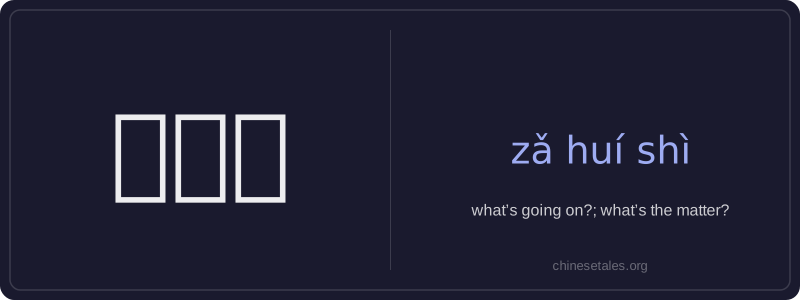
'Zǎ huí shì' is an informal, spoken expression used to ask 'What’s going on?' or 'What’s the matter?' It literally breaks down as 咋 (zǎ, colloquial for 'how/what'), 回 (huí, a measure word for events or occurrences), and 事 (shì, 'matter' or 'affair'). Together, it functions as a rhetorical or concerned question about a situation—often implying surprise, confusion, or mild alarm. It’s common in Northern Chinese dialects (especially Northeastern Mandarin) and widely understood across China in casual speech.
This phrase carries emotional weight: it’s rarely neutral—it suggests the speaker has noticed something unexpected, odd, or possibly troubling. It’s used among friends, family, or colleagues in relaxed settings, but avoided in formal writing or polite professional contexts. Unlike standard Mandarin equivalents like '怎么了?' (zěnme le?), 'zǎ huí shì' feels more vivid, emphatic, and regionally flavored—conveying immediacy and personal involvement.
Example Sentences
Related Words
国语
‘Guó yǔ’ literally means 'national language'—
无论谁
‘无论谁’ (wú lùn shéi) is a pronoun meaning
外语
‘外语’ literally means ‘outside language’ —
不对
不对 (bù duì) literally combines 不 (bù), meani
我的
我的 (wǒ de) is a possessive pronoun meaning 'my'
违规
违规 (wéi guī) literally means 'to violate rules
亲笔
‘亲笔’ literally means ‘one’s own hand’—comb
面条
‘面条’ (miàn tiáo) literally means ‘flour str