Word Explanation
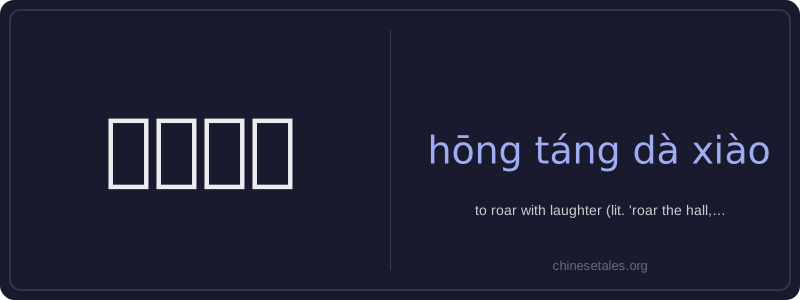
'Hōng táng dà xiào' literally means 'roar the hall, great laugh'—a vivid idiom describing spontaneous, loud, collective laughter from an entire group of people, often in response to something unexpectedly funny. The character 哄 (hōng) conveys a booming, resonant sound; 堂 (táng) refers to a large, open space like a hall or classroom; 大 (dà) emphasizes scale and intensity; and 笑 (xiào) means 'to laugh.' Together, they evoke the image of laughter so infectious and powerful that it fills and shakes the whole room.
This idiom is commonly used in storytelling, news reports, and everyday narration to highlight a moment of shared, unrestrained amusement—especially when humor arises from irony, absurdity, or gentle teasing. It carries a warm, lighthearted tone and is rarely used in formal writing unless describing a specific anecdotal scene. Unlike simple verbs like 'laugh,' 哄堂大笑 implies group synchrony and emotional contagion, not just individual mirth.
Example Sentences
Related Words
国语
‘Guó yǔ’ literally means 'national language'—
无论谁
‘无论谁’ (wú lùn shéi) is a pronoun meaning
外语
‘外语’ literally means ‘outside language’ —
不对
不对 (bù duì) literally combines 不 (bù), meani
我的
我的 (wǒ de) is a possessive pronoun meaning 'my'
违规
违规 (wéi guī) literally means 'to violate rules
亲笔
‘亲笔’ literally means ‘one’s own hand’—comb
面条
‘面条’ (miàn tiáo) literally means ‘flour str