Word Explanation
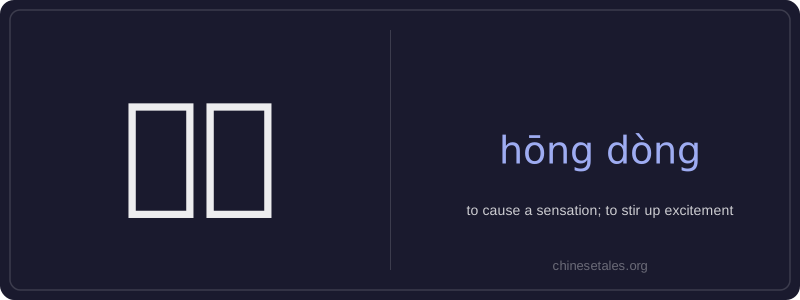
‘哄动’ is a verb meaning ‘to cause a sensation’ or ‘to stir up widespread excitement or commotion’. The first character 哄 (hōng) originally suggests loud, collective noise—like a crowd roaring or buzzing—and the second character 动 (dòng) means ‘to move’ or ‘to stir’. Together, they evoke the image of a sudden, lively ripple of reaction spreading through people, often triggered by surprising news, a celebrity appearance, or an unexpected event. It emphasizes the emotional and social impact rather than physical movement.
This word is commonly used in media reports, social commentary, and spoken Chinese when describing events that capture public attention rapidly—especially online trends, viral stories, or dramatic announcements. While it can carry neutral or slightly positive connotations (e.g., excitement), context may shade it toward mild sensationalism. It’s more literary or journalistic than colloquial; everyday speakers might prefer simpler alternatives like ‘引起轰动’ (yǐnqǐ hōngdòng) for clarity.
Example Sentences
Related Words
国语
‘Guó yǔ’ literally means 'national language'—
无论谁
‘无论谁’ (wú lùn shéi) is a pronoun meaning
外语
‘外语’ literally means ‘outside language’ —
不对
不对 (bù duì) literally combines 不 (bù), meani
我的
我的 (wǒ de) is a possessive pronoun meaning 'my'
违规
违规 (wéi guī) literally means 'to violate rules
亲笔
‘亲笔’ literally means ‘one’s own hand’—comb
面条
‘面条’ (miàn tiáo) literally means ‘flour str