Word Explanation
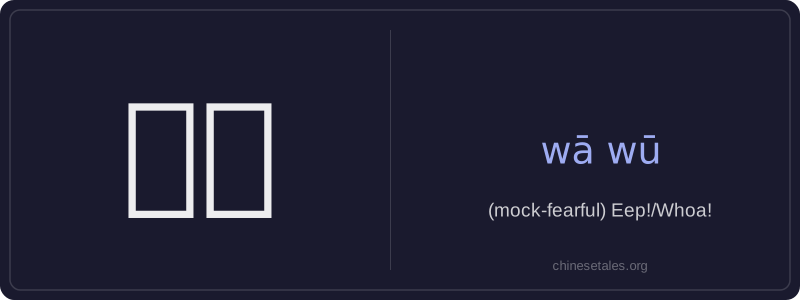
‘哇呜’ is an expressive interjection used to convey mock fear, sudden surprise, or playful alarm—like a cartoonish ‘Eep!’ or ‘Whoa!’ It combines two onomatopoeic characters: 哇 (wā), often signaling shock or awe, and 呜 (wū), which mimics a soft wail or whimper. Together, they form a lighthearted, exaggerated sound effect rather than a literal description of emotion.
This expression is commonly used in informal spoken Chinese, especially by children or in animated storytelling, role-play, or humorous online communication. It’s not appropriate for formal writing or serious contexts. While both characters individually can appear in other expressions (e.g., 哇 for excitement, 呜 for crying), their pairing as ‘哇呜’ is fixed and functions as a single unit—never split or modified. Think of it as the Chinese equivalent of a stylized gasp with a tiny whimper attached.
Example Sentences
Related Words
国语
‘Guó yǔ’ literally means 'national language'—
无论谁
‘无论谁’ (wú lùn shéi) is a pronoun meaning
外语
‘外语’ literally means ‘outside language’ —
不对
不对 (bù duì) literally combines 不 (bù), meani
我的
我的 (wǒ de) is a possessive pronoun meaning 'my'
违规
违规 (wéi guī) literally means 'to violate rules
亲笔
‘亲笔’ literally means ‘one’s own hand’—comb
面条
‘面条’ (miàn tiáo) literally means ‘flour str