Word Explanation
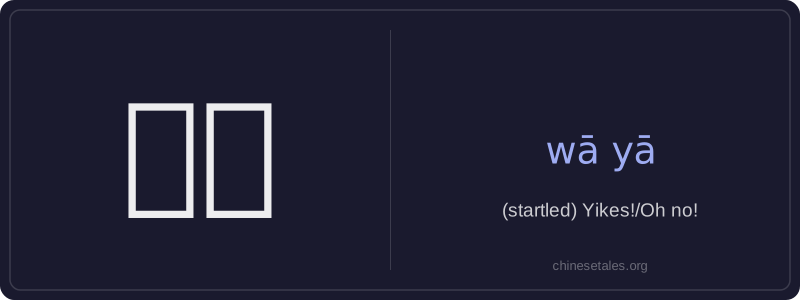
'Wow-ya' (wā yā) is an expressive interjection used to convey sudden surprise, alarm, or dismay — similar to 'Yikes!' or 'Oh no!' in English. Though it looks like two separate characters, 哇 and 呀, it functions as a fixed, inseparable exclamatory unit. Both characters individually are common sentence-final particles expressing emotion (哇 often signals excitement or shock; 呀 softens tone or adds urgency), but together they intensify the sense of startled reaction, especially in spoken, informal contexts.
This expression is highly colloquial and typically appears at the beginning of a sentence or as a standalone utterance. It’s commonly used by children and adults alike in everyday speech when something unexpected or slightly threatening happens — like spotting a spider, dropping food, or hearing bad news. Unlike formal written language, 哇呀 rarely appears in essays or official documents; its power lies in vocal delivery — often with rising intonation and widened eyes.
Example Sentences
Related Words
国语
‘Guó yǔ’ literally means 'national language'—
无论谁
‘无论谁’ (wú lùn shéi) is a pronoun meaning
外语
‘外语’ literally means ‘outside language’ —
不对
不对 (bù duì) literally combines 不 (bù), meani
我的
我的 (wǒ de) is a possessive pronoun meaning 'my'
违规
违规 (wéi guī) literally means 'to violate rules
亲笔
‘亲笔’ literally means ‘one’s own hand’—comb
面条
‘面条’ (miàn tiáo) literally means ‘flour str