Word Explanation
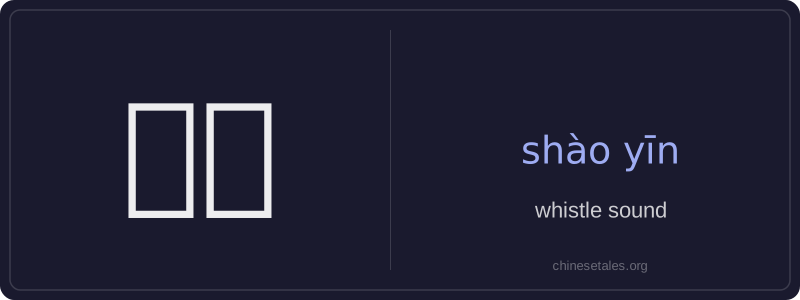
‘哨音’ literally combines 哨 (shào), meaning ‘whistle’—a small instrument or action that produces a high-pitched, piercing sound—and 音 (yīn), meaning ‘sound’ or ‘tone’. Together, they form a compound noun meaning ‘whistle sound’: the sharp, clear, often high-frequency sound made by blowing through a whistle, or sometimes by birds, dolphins, or even machinery. It emphasizes the acoustic quality rather than the object itself.
This word is commonly used in contexts involving communication, warning signals, or animal behavior—for example, describing how certain birds like kingfishers or whistling ducks produce distinctive, flute-like calls. It also appears in descriptions of human-made signals, such as train whistles or referee whistles during sports. Unlike the verb ‘whistle’ (吹口哨), ‘哨音’ is strictly nominal and refers only to the audible output—not the act or the device.
Example Sentences
Related Words
国语
‘Guó yǔ’ literally means 'national language'—
无论谁
‘无论谁’ (wú lùn shéi) is a pronoun meaning
外语
‘外语’ literally means ‘outside language’ —
不对
不对 (bù duì) literally combines 不 (bù), meani
我的
我的 (wǒ de) is a possessive pronoun meaning 'my'
违规
违规 (wéi guī) literally means 'to violate rules
亲笔
‘亲笔’ literally means ‘one’s own hand’—comb
面条
‘面条’ (miàn tiáo) literally means ‘flour str