Word Explanation
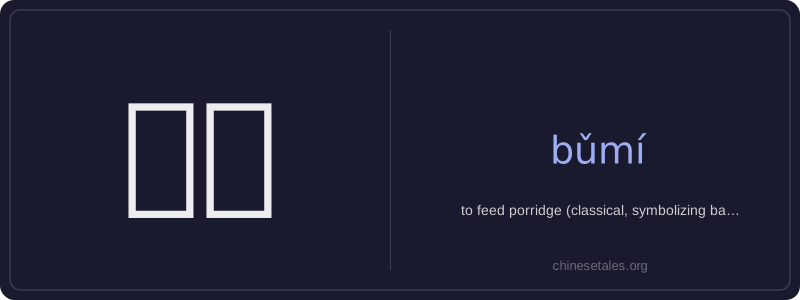
‘哺糜’ is a classical Chinese compound verb meaning ‘to feed porridge’—a symbolic act representing the provision of basic, life-sustaining nourishment. The first character 哺 (bǔ) means ‘to feed’ or ‘to nurse,’ often used for mammals feeding their young; the second, 糜 (mí), refers to ‘porridge’ or ‘gruel,’ especially thin, cooked grain—traditionally associated with simplicity, humility, and care for the vulnerable.
This term appears primarily in literary, historical, or philosophical texts—not modern spoken Chinese—and frequently describes nurturing behavior in animal fables or moral allegories (e.g., a mother bird ‘feeding porridge’ to her chicks, though birds don’t literally eat porridge; the phrase is metaphorical). It evokes tenderness, duty, and foundational sustenance, and may carry Confucian connotations of benevolent care and filial responsibility extended even to creatures.
Example Sentences
Related Words
国语
‘Guó yǔ’ literally means 'national language'—
无论谁
‘无论谁’ (wú lùn shéi) is a pronoun meaning
外语
‘外语’ literally means ‘outside language’ —
不对
不对 (bù duì) literally combines 不 (bù), meani
我的
我的 (wǒ de) is a possessive pronoun meaning 'my'
违规
违规 (wéi guī) literally means 'to violate rules
亲笔
‘亲笔’ literally means ‘one’s own hand’—comb
面条
‘面条’ (miàn tiáo) literally means ‘flour str