Word Explanation
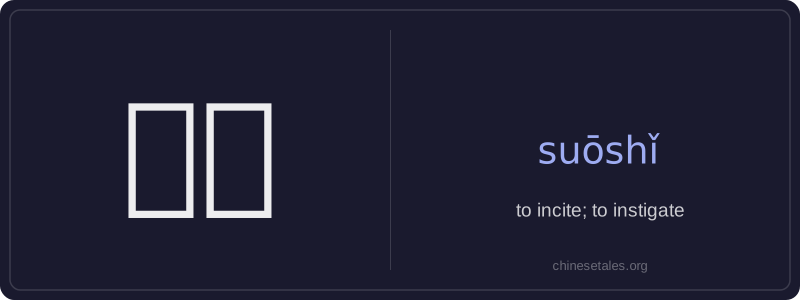
唆使 is a formal, slightly negative verb meaning 'to incite' or 'to instigate'—typically urging someone to do something wrong, harmful, or unlawful. The first character 唆 (suō) originally evokes the sound of coaxing or urging (like a dog being called), and carries connotations of subtle, persistent prompting; the second character 使 (shǐ) means 'to cause' or 'to make (someone do something)'. Together, they form a compound emphasizing deliberate, often underhanded influence over another person’s actions.
This word is commonly used in legal, journalistic, or moral contexts—for example, describing someone persuading a minor to commit theft, or a leader provoking unrest. It implies intentionality and responsibility on the part of the instigator, and often appears with agents (e.g., 'by X') or in passive constructions. While neutral in structure, 唆使 almost always carries a critical or condemnatory tone.
Example Sentences
Related Words
国语
‘Guó yǔ’ literally means 'national language'—
无论谁
‘无论谁’ (wú lùn shéi) is a pronoun meaning
外语
‘外语’ literally means ‘outside language’ —
不对
不对 (bù duì) literally combines 不 (bù), meani
我的
我的 (wǒ de) is a possessive pronoun meaning 'my'
违规
违规 (wéi guī) literally means 'to violate rules
亲笔
‘亲笔’ literally means ‘one’s own hand’—comb
面条
‘面条’ (miàn tiáo) literally means ‘flour str