Word Explanation
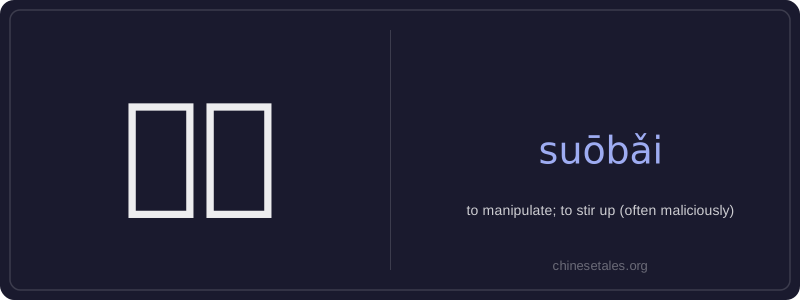
'唆摆' (suōbǎi) is a colloquial verb meaning to manipulate or incite someone—often secretly, unethically, or with malicious intent—to act against their better judgment or interests. The first character 唆 (suō) originally means 'to urge on' or 'to instigate' (as in 唆使), while 摆 (bǎi) here carries the sense of 'to arrange' or 'to control like a puppet', echoing its use in phrases like 摆布 (bǎibù, 'to manipulate'). Together, they evoke the image of someone pulling strings behind the scenes, steering others’ actions for personal gain or mischief.
This word is commonly used in informal speech and writing, especially when describing underhanded influence—such as stirring up conflict among friends, pressuring a subordinate to cover up a mistake, or goading someone into an unfair confrontation. It carries strong negative connotations and implies deception or exploitation; it’s rarely neutral or positive. While related to words like 教唆 (jiàosuō, 'to incite') and 操纵 (cāozòng, 'to manipulate'), 唆摆 feels more vivid, visceral, and often slightly slangy or regional (especially common in Northern Mandarin).
Example Sentences
Related Words
国语
‘Guó yǔ’ literally means 'national language'—
无论谁
‘无论谁’ (wú lùn shéi) is a pronoun meaning
外语
‘外语’ literally means ‘outside language’ —
不对
不对 (bù duì) literally combines 不 (bù), meani
我的
我的 (wǒ de) is a possessive pronoun meaning 'my'
违规
违规 (wéi guī) literally means 'to violate rules
亲笔
‘亲笔’ literally means ‘one’s own hand’—comb
面条
‘面条’ (miàn tiáo) literally means ‘flour str