Word Explanation
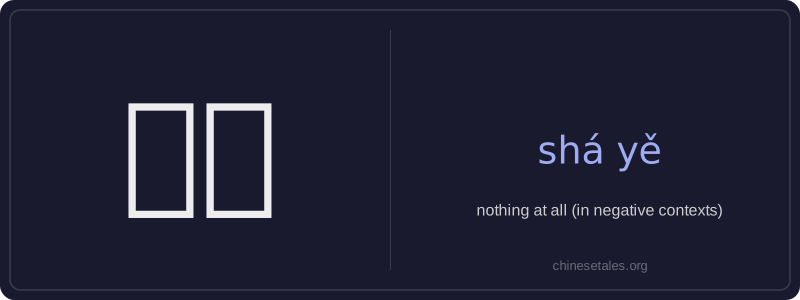
'Shá yě' is a colloquial, emphatic negative pronoun meaning 'nothing at all' or 'not even anything.' It combines the interrogative pronoun 'shá' (what) with the adverb 'yě' (also, even), forming an intensified negation. Unlike formal equivalents like 'shénme dōu bù' (nothing at all), 'shá yě' carries strong spoken flavor and appears almost exclusively in negative sentences — typically following 'bù' or 'méi' — to stress total absence or complete lack of something.
This phrase reflects informal northern Mandarin speech patterns and is common in daily conversation among friends, family, or casual settings. It’s rarely used in writing or formal speech. The tone on 'shá' is third tone (not neutral), and the 'yě' retains its original fourth tone. Learners should note that 'shá yě' cannot stand alone as a subject without a verb or negation — it must appear within a negative clause, often with 'bù' or 'méi' preceding it.
Example Sentences
Related Words
国语
‘Guó yǔ’ literally means 'national language'—
无论谁
‘无论谁’ (wú lùn shéi) is a pronoun meaning
外语
‘外语’ literally means ‘outside language’ —
不对
不对 (bù duì) literally combines 不 (bù), meani
我的
我的 (wǒ de) is a possessive pronoun meaning 'my'
违规
违规 (wéi guī) literally means 'to violate rules
亲笔
‘亲笔’ literally means ‘one’s own hand’—comb
面条
‘面条’ (miàn tiáo) literally means ‘flour str