Word Explanation
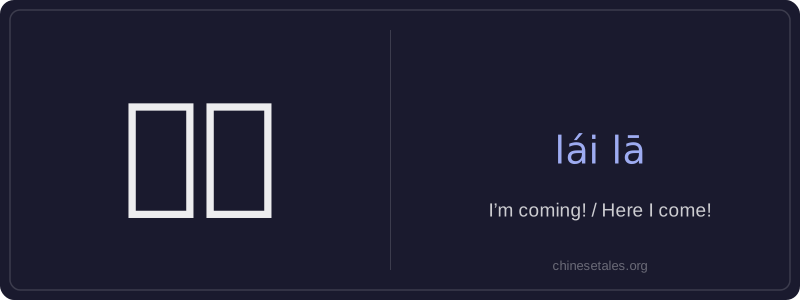
‘来啦’ is an energetic, cheerful interjection used to announce one’s arrival or imminent appearance—like shouting ‘I’m coming!’ as you rush into a room or answer a call. The character 来 (lái) means ‘to come’, and the particle 啦 (lā) is a colloquial sentence-final particle that adds warmth, immediacy, and friendliness. Together, they form a fixed, spoken expression—not a verb phrase—and are rarely used in formal writing.
This phrase conveys enthusiasm, reassurance, or playful responsiveness. It’s commonly heard in homes, classrooms, or workplaces when someone answers a summons (e.g., a parent calling a child, a teacher asking for attention, or a colleague responding to a request). Tone matters: it’s always said with rising or level energy—not flat or hesitant—and often with a smile. Native speakers use it instinctively in real-time interaction, not for describing past or future actions.
Example Sentences
Related Words
国语
‘Guó yǔ’ literally means 'national language'—
无论谁
‘无论谁’ (wú lùn shéi) is a pronoun meaning
外语
‘外语’ literally means ‘outside language’ —
不对
不对 (bù duì) literally combines 不 (bù), meani
我的
我的 (wǒ de) is a possessive pronoun meaning 'my'
违规
违规 (wéi guī) literally means 'to violate rules
亲笔
‘亲笔’ literally means ‘one’s own hand’—comb
面条
‘面条’ (miàn tiáo) literally means ‘flour str