Word Explanation
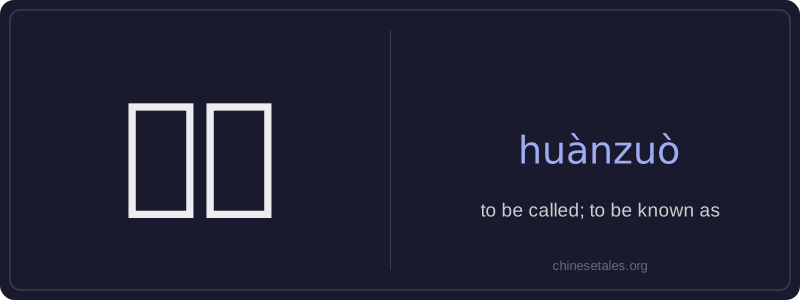
'唤作' is a formal or literary verb phrase meaning 'to be called' or 'to be known as'. It combines 唤 (huàn), meaning 'to call' or 'to summon', and 作 (zuò), meaning 'to act as' or 'to serve as'. Together, they express the idea of being designated or identified by a particular name or title. Unlike the more common 叫做 (jiàozuò), 唤作 carries a slightly classical or elegant tone and appears frequently in written Chinese — especially in descriptive, narrative, or expository texts involving names, classifications, or introductions.
This phrase typically follows the subject directly and precedes the name or label: [Subject] + 唤作 + [Name/Title]. It is rarely used in casual spoken conversation but appears often in nature writing, historical accounts, and scientific descriptions where precise naming conventions matter — for instance, when introducing animal species, regional terms, or traditional titles.
Example Sentences
Related Words
国语
‘Guó yǔ’ literally means 'national language'—
无论谁
‘无论谁’ (wú lùn shéi) is a pronoun meaning
外语
‘外语’ literally means ‘outside language’ —
不对
不对 (bù duì) literally combines 不 (bù), meani
我的
我的 (wǒ de) is a possessive pronoun meaning 'my'
违规
违规 (wéi guī) literally means 'to violate rules
亲笔
‘亲笔’ literally means ‘one’s own hand’—comb
面条
‘面条’ (miàn tiáo) literally means ‘flour str