Word Explanation
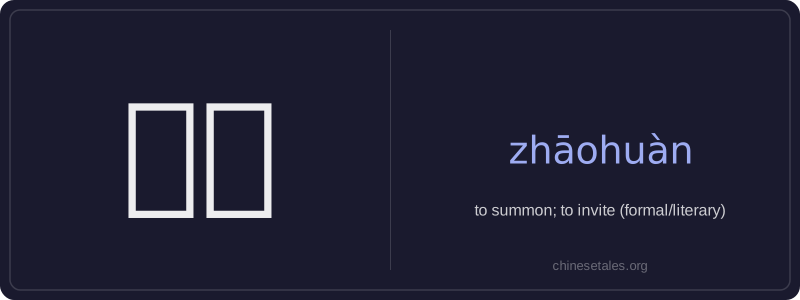
‘招唤’ is a formal or literary verb meaning 'to summon' or 'to call forth', often implying authority, ritual, or solemn intent. The first character 招 (zhāo) means 'to attract', 'to invite', or 'to beckon', while 唤 (huàn) means 'to call' or 'to shout for'. Together, they form a compound emphasizing intentional, often ceremonial or commanding, calling—such as summoning spirits in classical texts, calling animals in traditional farming contexts, or invoking forces in poetry. It is rarely used in everyday spoken Mandarin.
This word appears most frequently in classical literature, historical narratives, Daoist or folk religious texts, and poetic descriptions where agency, reverence, or power is implied in the act of calling. Unlike common modern verbs like 叫 (jiào) or 邀请 (yāoqǐng), 招唤 carries gravitas and stylistic elevation. Learners should note it is not interchangeable with casual invitation terms—it does not convey warmth or informality, but rather formality, distance, or even mysticism.
Example Sentences
Related Words
国语
‘Guó yǔ’ literally means 'national language'—
无论谁
‘无论谁’ (wú lùn shéi) is a pronoun meaning
外语
‘外语’ literally means ‘outside language’ —
不对
不对 (bù duì) literally combines 不 (bù), meani
我的
我的 (wǒ de) is a possessive pronoun meaning 'my'
违规
违规 (wéi guī) literally means 'to violate rules
亲笔
‘亲笔’ literally means ‘one’s own hand’—comb
面条
‘面条’ (miàn tiáo) literally means ‘flour str