Word Explanation
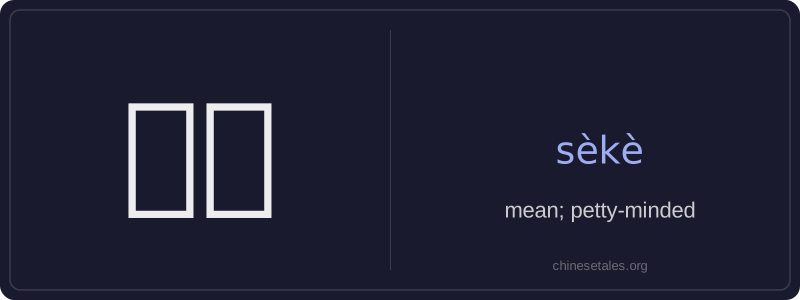
'Sèkè' is an adjective describing someone who is excessively stingy, tight-fisted, or petty-minded — not merely frugal, but unwilling to share or spend even when appropriate. The first character '啬' (sè) originally meant 'to store up' or 'to hoard', and carries connotations of miserliness; the second character '刻' (kè) means 'to carve' or 'to engrave', but in compound words often intensifies meaning, suggesting harshness, rigidity, or excessive precision — here implying an unyielding, narrow attitude toward resources or generosity.
This term is used critically, often in moral or social commentary, to describe people who lack generosity of spirit — whether with money, time, praise, or emotional support. It appears more frequently in written Chinese and formal speech than in casual conversation, and tends to carry a stronger negative judgment than simpler terms like '小气' (xiǎoqì). While it can describe behavior toward material things, it also extends metaphorically to intellectual or emotional stinginess — e.g., withholding encouragement or refusing to forgive.
Example Sentences
Related Words
国语
‘Guó yǔ’ literally means 'national language'—
无论谁
‘无论谁’ (wú lùn shéi) is a pronoun meaning
外语
‘外语’ literally means ‘outside language’ —
不对
不对 (bù duì) literally combines 不 (bù), meani
我的
我的 (wǒ de) is a possessive pronoun meaning 'my'
违规
违规 (wéi guī) literally means 'to violate rules
亲笔
‘亲笔’ literally means ‘one’s own hand’—comb
面条
‘面条’ (miàn tiáo) literally means ‘flour str