Word Explanation
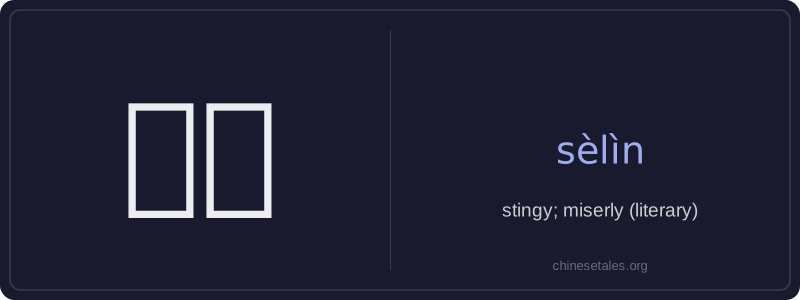
‘啬吝’ is a literary, somewhat formal adjective meaning 'stingy' or 'miserly' — describing someone who is excessively unwilling to spend money or share resources. Though composed of two characters (啬 and 吝), each independently meaning 'niggardly' or 'grudging', together they form a compound that intensifies the sense of extreme frugality bordering on selfishness. The term carries a clear negative connotation and appears more often in classical texts, formal writing, or critical commentary than in casual speech.
Historically, 啬 originally referred to careful conservation (e.g., of grain or energy), while 吝 emphasized reluctance to give or part with something. In modern usage, 啬吝 functions as a fixed, two-syllable adjective — it does not take aspect markers like 了 or 过, and rarely appears predicatively without modification (e.g., it’s more common in phrases like ‘啬吝之人’ than ‘他很啬吝’). It’s frequently used to criticize moral failings, especially in contrast to Confucian ideals of generosity and benevolence.
Example Sentences
Related Words
国语
‘Guó yǔ’ literally means 'national language'—
无论谁
‘无论谁’ (wú lùn shéi) is a pronoun meaning
外语
‘外语’ literally means ‘outside language’ —
不对
不对 (bù duì) literally combines 不 (bù), meani
我的
我的 (wǒ de) is a possessive pronoun meaning 'my'
违规
违规 (wéi guī) literally means 'to violate rules
亲笔
‘亲笔’ literally means ‘one’s own hand’—comb
面条
‘面条’ (miàn tiáo) literally means ‘flour str