Word Explanation
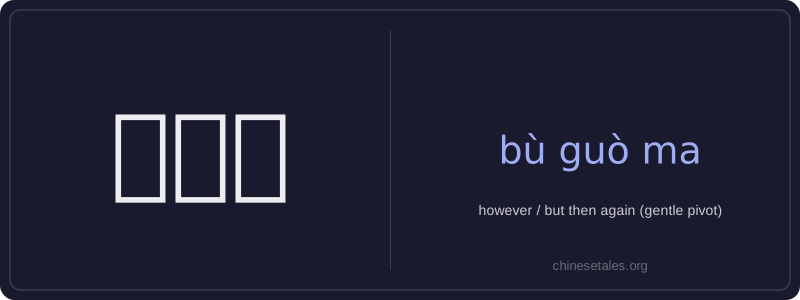
‘不過嘛’ (bù guò ma) is a conversational phrase used to gently introduce a contrasting idea or soften a correction, refusal, or limitation. Literally, ‘不’ means ‘not’, ‘過’ means ‘to pass’ or ‘excess’, and together ‘不過’ means ‘but’ or ‘however’; the particle ‘嘛’ adds a tone of mild explanation, familiarity, or shared understanding—like saying ‘you know’ or ‘as you’d expect’. It signals a thoughtful pause before offering nuance, making speech sound more considerate and less abrupt.
This phrase appears frequently in everyday spoken Chinese—especially when hedging, qualifying statements, or shifting topics politely. It’s rarely used in formal writing. Native speakers often use it with rising intonation and slight pause after ‘不過’, letting ‘嘛’ carry the pragmatic weight: not just contrast, but empathy or contextual awareness. Learners should note that ‘嘛’ here isn’t emphatic (as in ‘是嘛?’), but rather discourse-modifying—making ‘不過嘛’ function like ‘that said…’ or ‘but then again…’ in English.
Example Sentences
Related Words
国语
‘Guó yǔ’ literally means 'national language'—
无论谁
‘无论谁’ (wú lùn shéi) is a pronoun meaning
外语
‘外语’ literally means ‘outside language’ —
不对
不对 (bù duì) literally combines 不 (bù), meani
我的
我的 (wǒ de) is a possessive pronoun meaning 'my'
违规
违规 (wéi guī) literally means 'to violate rules
亲笔
‘亲笔’ literally means ‘one’s own hand’—comb
面条
‘面条’ (miàn tiáo) literally means ‘flour str