Word Explanation
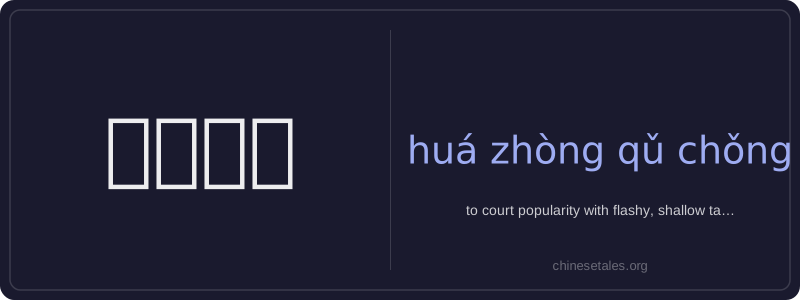
'Huá zhòng qǔ chǒng' literally means 'to stir up the crowd to gain favor' — each character contributes directly: 哗 (huá) means 'to make a loud, attention-grabbing noise'; 众 (zhòng) means 'the masses' or 'public'; 取 (qǔ) means 'to obtain'; and 宠 (chǒng) means 'favor' or 'popularity'. Together, the phrase describes deliberately using flashy, exaggerated, or superficial methods — like sensational claims, theatrical behavior, or empty rhetoric — not to convey substance, but purely to attract applause or win approval.
This is a critical, often disapproving term used in formal writing, political commentary, media analysis, and academic discourse. It implies insincerity and a lack of integrity — the speaker or actor prioritizes image over truth or value. While it can describe individuals (e.g., politicians, influencers, or performers), it’s also applied to institutions or campaigns. The tone is consistently negative, suggesting manipulation rather than genuine connection with an audience.
Example Sentences
Related Words
国语
‘Guó yǔ’ literally means 'national language'—
无论谁
‘无论谁’ (wú lùn shéi) is a pronoun meaning
外语
‘外语’ literally means ‘outside language’ —
不对
不对 (bù duì) literally combines 不 (bù), meani
我的
我的 (wǒ de) is a possessive pronoun meaning 'my'
违规
违规 (wéi guī) literally means 'to violate rules
亲笔
‘亲笔’ literally means ‘one’s own hand’—comb
面条
‘面条’ (miàn tiáo) literally means ‘flour str