Word Explanation
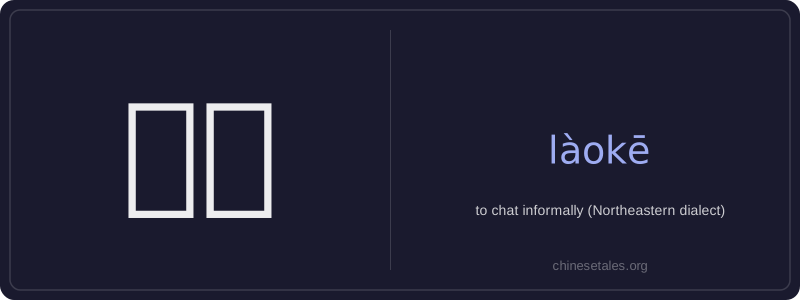
'Làokē' is a colloquial verb from Northeastern Chinese dialects meaning to chat casually, warmly, and at length—often over tea, snacks, or while doing light chores. Though written with two characters, it functions as a single inseparable unit; neither '唠' nor '嗑' carries this exact meaning alone in standard Mandarin. '唠' historically suggests repetitive or talkative speech, while '嗑' literally means 'to crack (e.g., sunflower seeds)', evoking the relaxed, rhythmic, snack-accompanied nature of such conversations.
This word conveys warmth, familiarity, and regional identity—it’s rarely used in formal writing or by non-Northeastern speakers without intentional dialect flavor. It implies mutual ease, not small talk: you 'làokē' with close friends, family, or neighbors, never with your boss in a meeting. The activity often includes storytelling, joking, sharing gossip, or reminiscing—always unhurried and emotionally open.
Example Sentences
Related Words
国语
‘Guó yǔ’ literally means 'national language'—
无论谁
‘无论谁’ (wú lùn shéi) is a pronoun meaning
外语
‘外语’ literally means ‘outside language’ —
不对
不对 (bù duì) literally combines 不 (bù), meani
我的
我的 (wǒ de) is a possessive pronoun meaning 'my'
违规
违规 (wéi guī) literally means 'to violate rules
亲笔
‘亲笔’ literally means ‘one’s own hand’—comb
面条
‘面条’ (miàn tiáo) literally means ‘flour str