Word Explanation
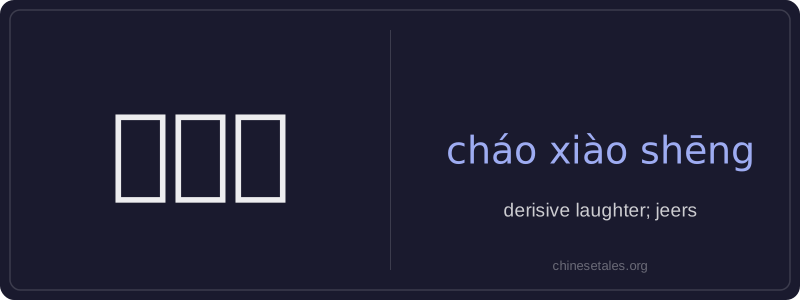
‘嘲笑声’ literally combines three characters: ‘嘲’ (cháo) meaning ‘to mock’ or ‘to ridicule’, ‘笑’ (xiào) meaning ‘to laugh’, and ‘声’ (shēng) meaning ‘sound’ or ‘voice’. Together, they form a noun that refers to laughter intended to belittle, humiliate, or express contempt — not lighthearted amusement, but scornful, derisive laughter. It often carries strong negative emotional weight and implies a group or individual targeting someone with mockery.
This word is commonly used in written narratives, news reports, or formal speech to describe hostile or cruel social reactions — for example, when someone is laughed at for making a mistake, expressing an unpopular opinion, or being different. Unlike neutral terms like ‘笑声’ (laughter), ‘嘲笑声’ always conveys judgment and emotional harm, and it frequently appears with verbs like ‘发出’ (emit), ‘响起’ (ring out), or ‘淹没’ (drown out). It’s rarely used in casual conversation among friends, as it sounds literary and emotionally charged.
Example Sentences
Related Words
国语
‘Guó yǔ’ literally means 'national language'—
无论谁
‘无论谁’ (wú lùn shéi) is a pronoun meaning
外语
‘外语’ literally means ‘outside language’ —
不对
不对 (bù duì) literally combines 不 (bù), meani
我的
我的 (wǒ de) is a possessive pronoun meaning 'my'
违规
违规 (wéi guī) literally means 'to violate rules
亲笔
‘亲笔’ literally means ‘one’s own hand’—comb
面条
‘面条’ (miàn tiáo) literally means ‘flour str