Word Explanation
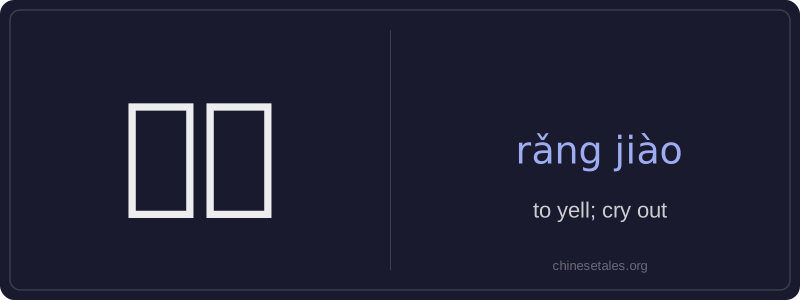
嚷叫 is a compound verb meaning 'to yell' or 'to cry out'—often with urgency, anger, fear, or strong emotion. It combines 嚷 (rǎng), which emphasizes loud, insistent vocalizing (especially in protest or complaint), and 叫 (jiào), which means 'to call' or 'to shout'. Together, they intensify the sense of unrestrained, forceful vocal expression—not just speaking loudly, but doing so with emotional charge or alarm.
This word is commonly used in spoken and literary Chinese to describe sudden, emotionally charged outbursts: a child screaming in fright, someone shouting for help, or a person angrily protesting injustice. It’s more vivid and expressive than simpler verbs like 叫 or 大喊, and often implies loss of composure. While not inherently vulgar, it carries an informal, sometimes slightly dramatic tone—and is rarely used in formal writing or polite conversation unless describing actual urgent vocalizations.
Example Sentences
Related Words
国语
‘Guó yǔ’ literally means 'national language'—
无论谁
‘无论谁’ (wú lùn shéi) is a pronoun meaning
外语
‘外语’ literally means ‘outside language’ —
不对
不对 (bù duì) literally combines 不 (bù), meani
我的
我的 (wǒ de) is a possessive pronoun meaning 'my'
违规
违规 (wéi guī) literally means 'to violate rules
亲笔
‘亲笔’ literally means ‘one’s own hand’—comb
面条
‘面条’ (miàn tiáo) literally means ‘flour str