Word Explanation
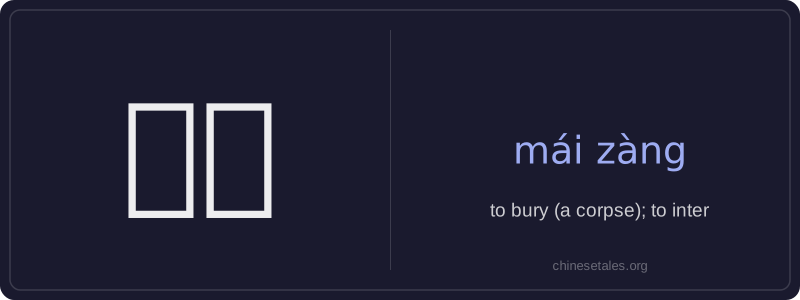
埋葬 (mái zàng) is a formal, literary verb meaning 'to bury (a corpse)' or 'to inter'—typically used for human remains but also applicable to animals in contexts like veterinary care or wildlife management. The first character 埋 (mái) means 'to bury' or 'to cover over', often implying concealment or entombment; the second character 葬 (zàng) specifically denotes 'funeral rites' or 'interment'. Together, they form a compound emphasizing the ritual and physical act of placing a body in the earth. It carries solemn, respectful connotations and is rarely used for casual or metaphorical burial (e.g., 'burying a memory' uses 埋, not 埋葬).
This word appears frequently in obituaries, historical texts, news reports about disasters or wars, and discussions of traditional funeral customs. It is more formal than simpler alternatives like 埋 (mái) alone and is never used for inanimate objects—unlike English 'bury', which allows metaphorical use. Its tone and register make it unsuitable for light or humorous contexts.
Example Sentences
Related Words
国语
‘Guó yǔ’ literally means 'national language'—
无论谁
‘无论谁’ (wú lùn shéi) is a pronoun meaning
外语
‘外语’ literally means ‘outside language’ —
不对
不对 (bù duì) literally combines 不 (bù), meani
我的
我的 (wǒ de) is a possessive pronoun meaning 'my'
违规
违规 (wéi guī) literally means 'to violate rules
亲笔
‘亲笔’ literally means ‘one’s own hand’—comb
面条
‘面条’ (miàn tiáo) literally means ‘flour str