Word Explanation
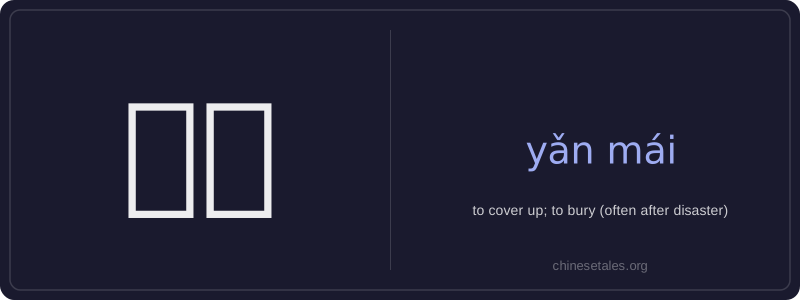
‘掩埋’ (yǎn mái) is a compound verb meaning 'to cover up' or 'to bury', especially in contexts involving concealment, disaster response, or sanitation. The first character 掩 (yǎn) means 'to cover, to hide', often implying intentional concealment or protection; the second character 埋 (mái) means 'to bury'—literally placing something underground or under debris. Together, they emphasize complete covering, typically with earth, rubble, snow, or other material. It’s commonly used in news reports about natural disasters (e.g., landslides, earthquakes), public health (e.g., burying contaminated soil or animal carcasses), or metaphorical concealment of evidence.
Unlike the simpler 埋 (mái), which can mean ‘to bury’ in neutral or everyday contexts (e.g., burying a treasure), 掩埋 carries stronger connotations of urgency, necessity, or finality—often implying that what is covered is hazardous, deceased, or must be removed from sight. It is rarely used for ceremonial burials (use 安葬 instead) and almost never for living beings intentionally.
Example Sentences
Related Words
国语
‘Guó yǔ’ literally means 'national language'—
无论谁
‘无论谁’ (wú lùn shéi) is a pronoun meaning
外语
‘外语’ literally means ‘outside language’ —
不对
不对 (bù duì) literally combines 不 (bù), meani
我的
我的 (wǒ de) is a possessive pronoun meaning 'my'
违规
违规 (wéi guī) literally means 'to violate rules
亲笔
‘亲笔’ literally means ‘one’s own hand’—comb
面条
‘面条’ (miàn tiáo) literally means ‘flour str