Word Explanation
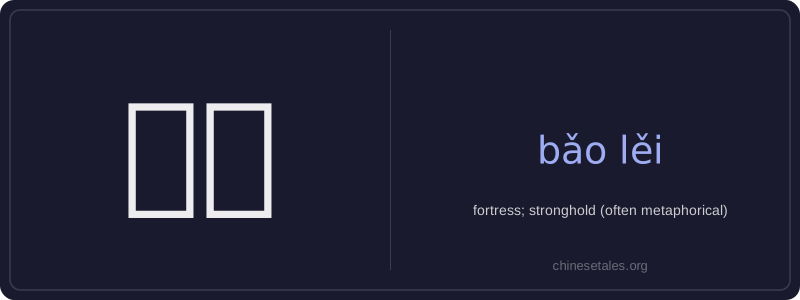
堡垒 (bǎo lěi) literally combines 堡 (bǎo), meaning 'fortified village' or 'small fortress', and 垒 (lěi), meaning 'rampart' or 'earthen defensive wall'. Together, they form a compound noun meaning 'fortress' or 'stronghold'—a heavily defended place designed to resist attack. Historically, it referred to military installations like castles or hilltop fortifications.
In modern usage, 堡垒 is often metaphorical: it describes any deeply entrenched position—ideological, institutional, or psychological—that resists change or outside influence. You’ll hear it in political discourse ('the last bastion of authoritarianism'), social commentary ('a fortress of privilege'), or even personal contexts ('her emotional fortress'). While concrete examples still appear (e.g., ancient city walls), the figurative sense dominates contemporary writing and speech.
Example Sentences
Related Words
国语
‘Guó yǔ’ literally means 'national language'—
无论谁
‘无论谁’ (wú lùn shéi) is a pronoun meaning
外语
‘外语’ literally means ‘outside language’ —
不对
不对 (bù duì) literally combines 不 (bù), meani
我的
我的 (wǒ de) is a possessive pronoun meaning 'my'
违规
违规 (wéi guī) literally means 'to violate rules
亲笔
‘亲笔’ literally means ‘one’s own hand’—comb
面条
‘面条’ (miàn tiáo) literally means ‘flour str