Word Explanation
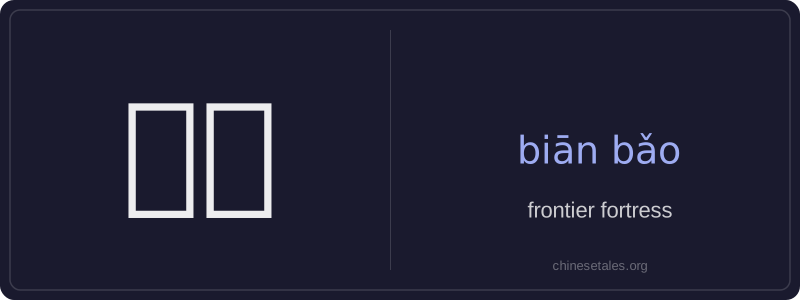
‘边堡’ (biān bǎo) literally combines 边 (biān), meaning 'border' or 'frontier', and 堡 (bǎo), meaning 'fortress' or 'walled stronghold'. Together, it refers specifically to a military fortress built along a country’s border for defense, surveillance, and control—especially in historical or strategic contexts. These structures were common in northern China along the Great Wall to guard against nomadic incursions.
Unlike generic terms like 城堡 (chéngbǎo, 'castle') or 要塞 (yàosài, 'fortress'), 边堡 emphasizes location and function: it is inherently frontier-located and militarily functional. It appears frequently in historical texts, geography lessons, and discussions of ancient Chinese defense systems. Modern usage is mostly literary or academic; you won’t hear it in casual conversation about everyday places.
Example Sentences
Related Words
国语
‘Guó yǔ’ literally means 'national language'—
无论谁
‘无论谁’ (wú lùn shéi) is a pronoun meaning
外语
‘外语’ literally means ‘outside language’ —
不对
不对 (bù duì) literally combines 不 (bù), meani
我的
我的 (wǒ de) is a possessive pronoun meaning 'my'
违规
违规 (wéi guī) literally means 'to violate rules
亲笔
‘亲笔’ literally means ‘one’s own hand’—comb
面条
‘面条’ (miàn tiáo) literally means ‘flour str