Word Explanation
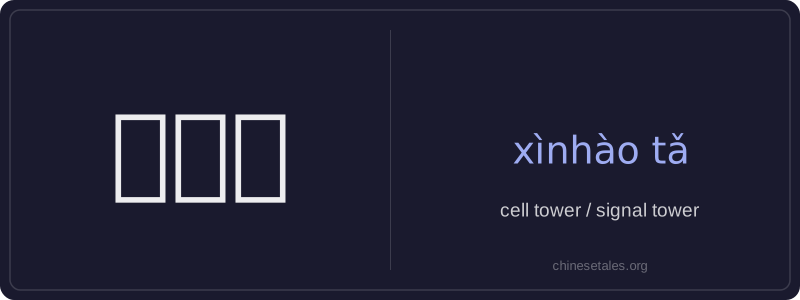
'信号塔' (xìn hào tǎ) literally means 'signal tower' — a compound noun formed from 信 (xìn, 'message' or 'information'), 号 (hào, 'signal' or 'call'), and 塔 (tǎ, 'tower'). Together, it refers to the tall, freestanding structures that transmit and receive wireless communication signals — most commonly for cellular phone networks, but also for radio, TV, or emergency services. These towers are essential infrastructure in both urban and rural areas, often visible on hillsides or rooftops.
In everyday Chinese, 信号塔 is used neutrally and technically; it’s not slang nor formal jargon, making it appropriate for news reports, technical discussions, and casual conversation about connectivity. While 'cell tower' is the most frequent English equivalent, note that 信号塔 may also refer to non-cellular signal infrastructure depending on context — unlike the more specific term 基站 (jī zhàn, 'base station'), which almost always denotes cellular equipment.
Example Sentences
Related Words
国语
‘Guó yǔ’ literally means 'national language'—
无论谁
‘无论谁’ (wú lùn shéi) is a pronoun meaning
外语
‘外语’ literally means ‘outside language’ —
不对
不对 (bù duì) literally combines 不 (bù), meani
我的
我的 (wǒ de) is a possessive pronoun meaning 'my'
违规
违规 (wéi guī) literally means 'to violate rules
亲笔
‘亲笔’ literally means ‘one’s own hand’—comb
面条
‘面条’ (miàn tiáo) literally means ‘flour str