Word Explanation
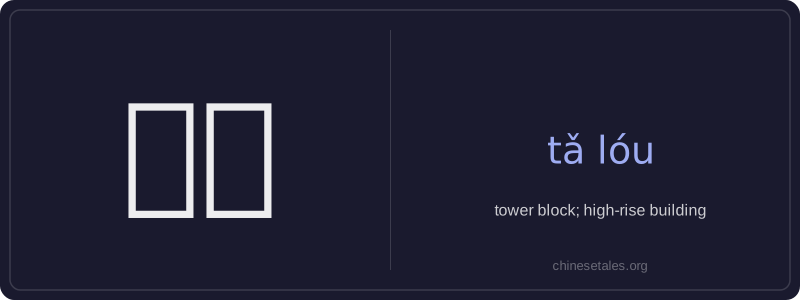
‘塔楼’ (tǎ lóu) literally combines ‘塔’ (tǎ), meaning ‘tower’, and ‘楼’ (lóu), meaning ‘building’ or ‘floor’. Together, it refers to a tall, vertical structure—typically a modern high-rise building with multiple floors, often used for residential, commercial, or office purposes. Unlike ‘塔’ alone—which usually denotes a freestanding, slender tower (e.g., a pagoda or broadcast tower)—‘塔楼’ emphasizes architectural height and functional use as a habitable building.
The term is common in urban planning, real estate, and everyday descriptions of city skylines. It’s neutral in register and widely understood across Mandarin-speaking regions. While ‘高楼’ (gāo lóu) is a more general term for ‘tall building’, ‘塔楼’ carries a subtle connotation of structural prominence, symmetry, and sometimes modern design—often appearing in compound terms like ‘塔楼住宅’ (tǎ lóu zhùzhái, ‘tower-block residence’) or ‘双塔楼’ (shuāng tǎ lóu, ‘twin tower blocks’).
Example Sentences
Related Words
国语
‘Guó yǔ’ literally means 'national language'—
无论谁
‘无论谁’ (wú lùn shéi) is a pronoun meaning
外语
‘外语’ literally means ‘outside language’ —
不对
不对 (bù duì) literally combines 不 (bù), meani
我的
我的 (wǒ de) is a possessive pronoun meaning 'my'
违规
违规 (wéi guī) literally means 'to violate rules
亲笔
‘亲笔’ literally means ‘one’s own hand’—comb
面条
‘面条’ (miàn tiáo) literally means ‘flour str