Word Explanation
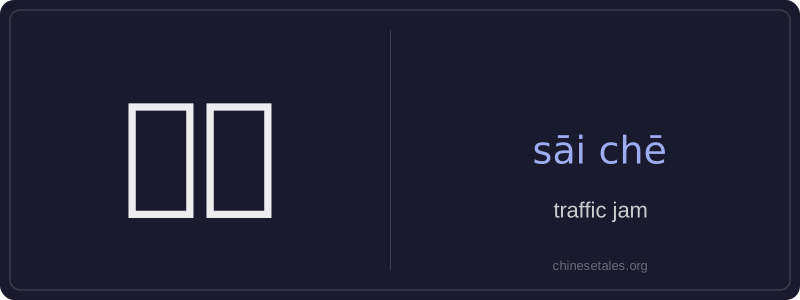
‘塞车’ literally means 'block car' — the character 塞 (sāi) means 'to block, to jam, or to stuff', and 车 (chē) means 'vehicle' or 'car'. Together, they form a compound noun meaning 'traffic jam' — a common phenomenon in urban areas where vehicles are stuck and unable to move smoothly due to congestion. It’s used exclusively for road traffic, not for trains, planes, or other transport modes.
The term is widely used in everyday spoken and written Chinese, especially in weather reports, news updates, navigation apps, and casual conversation about commuting. It’s neutral in register — appropriate for both informal chats and formal contexts like traffic bulletins. Unlike English 'gridlock', which implies extreme severity, 塞车 can describe anything from mild slowdowns to full stoppage, often modified by degree words like 很 (very), 特别 (especially), or 严重 (severe).
Example Sentences
Related Words
国语
‘Guó yǔ’ literally means 'national language'—
无论谁
‘无论谁’ (wú lùn shéi) is a pronoun meaning
外语
‘外语’ literally means ‘outside language’ —
不对
不对 (bù duì) literally combines 不 (bù), meani
我的
我的 (wǒ de) is a possessive pronoun meaning 'my'
违规
违规 (wéi guī) literally means 'to violate rules
亲笔
‘亲笔’ literally means ‘one’s own hand’—comb
面条
‘面条’ (miàn tiáo) literally means ‘flour str