Word Explanation
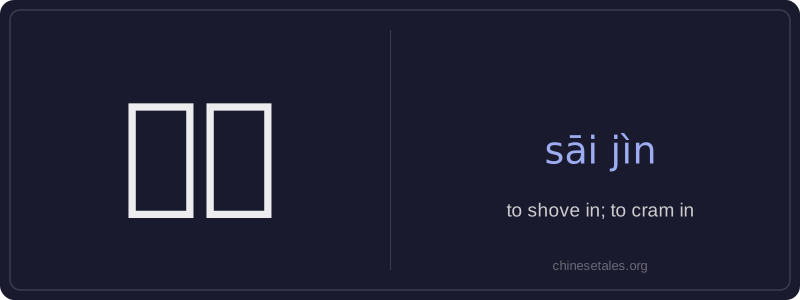
‘塞进’ is a compound verb meaning 'to shove in' or 'to cram in'—it emphasizes forceful, often hurried or tight insertion of something into a space. The first character 塞 (sāi) means 'to stuff' or 'to block', and the second 进 (jìn) means 'in' or 'into'; together, they form a directional verb complement structure where 塞 is the main action and 进 indicates the direction of movement. This word implies physical pressure, limited space, or urgency—and is commonly used with objects like papers, food, clothes, or small items.
It’s frequently heard in everyday spoken Chinese, especially when describing actions involving containers, pockets, bags, drawers, or tight openings. Unlike neutral verbs like 放进 (fàng jìn, 'to put in'), 塞进 carries a connotation of effort, lack of room, or informality. It can also be used figuratively in casual speech—for example, to describe hastily inserting information into a conversation—but literal physical usage dominates.
Example Sentences
Related Words
国语
‘Guó yǔ’ literally means 'national language'—
无论谁
‘无论谁’ (wú lùn shéi) is a pronoun meaning
外语
‘外语’ literally means ‘outside language’ —
不对
不对 (bù duì) literally combines 不 (bù), meani
我的
我的 (wǒ de) is a possessive pronoun meaning 'my'
违规
违规 (wéi guī) literally means 'to violate rules
亲笔
‘亲笔’ literally means ‘one’s own hand’—comb
面条
‘面条’ (miàn tiáo) literally means ‘flour str