Word Explanation
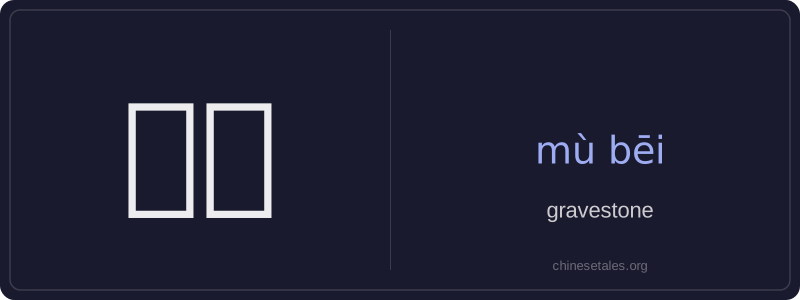
‘Mù bēi’ literally means ‘tomb stone’: 墓 (mù) means ‘tomb’, ‘grave’, or ‘burial site’, and 碑 (bēi) means ‘stone tablet’ or ‘stele’. Together, they refer specifically to a carved stone marker placed at a gravesite to commemorate the deceased—typically inscribed with the person’s name, birth and death dates, and sometimes a short epitaph. These markers are commonly found in cemeteries, ancestral burial grounds, or memorial parks across China and other Chinese-speaking regions.
Gravestones serve both practical and cultural functions: they help identify individual graves and reflect traditional values of filial piety and ancestor veneration. While modern materials like granite or marble are now common, the form remains deeply rooted in historical practice. In literature and daily speech, ‘mù bēi’ often evokes solemnity, remembrance, or reflections on mortality—not just as physical objects but as symbols of legacy and respect.
Example Sentences
Related Words
国语
‘Guó yǔ’ literally means 'national language'—
无论谁
‘无论谁’ (wú lùn shéi) is a pronoun meaning
外语
‘外语’ literally means ‘outside language’ —
不对
不对 (bù duì) literally combines 不 (bù), meani
我的
我的 (wǒ de) is a possessive pronoun meaning 'my'
违规
违规 (wéi guī) literally means 'to violate rules
亲笔
‘亲笔’ literally means ‘one’s own hand’—comb
面条
‘面条’ (miàn tiáo) literally means ‘flour str