Word Explanation
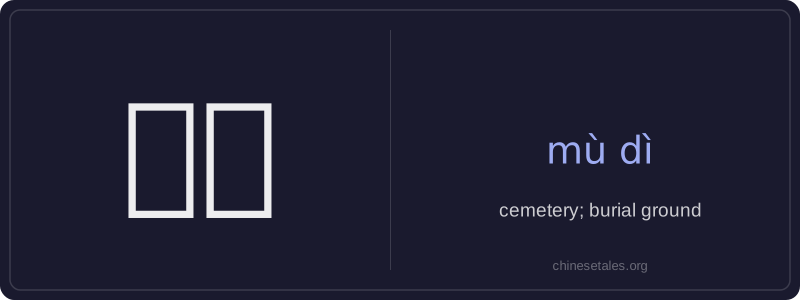
‘墓地’ (mù dì) literally combines 墓 (mù), meaning ‘tomb’ or ‘grave’, and 地 (dì), meaning ‘ground’ or ‘land’. Together, they form a compound noun meaning ‘cemetery’ or ‘burial ground’—a designated area where deceased people are buried. It is a formal, neutral term commonly used in official contexts, news reports, historical descriptions, and everyday speech when referring to burial sites.
The word carries no strong emotional connotation by itself but often appears in solemn, respectful, or administrative settings—for example, when discussing land use, family visits during Qingming Festival, or urban planning. Unlike more poetic or literary terms like 冢 (zhǒng) or ancient expressions such as 阴宅 (yīn zhái), ‘墓地’ is standard modern Mandarin and widely understood across all age groups and regions.
Example Sentences
Related Words
国语
‘Guó yǔ’ literally means 'national language'—
无论谁
‘无论谁’ (wú lùn shéi) is a pronoun meaning
外语
‘外语’ literally means ‘outside language’ —
不对
不对 (bù duì) literally combines 不 (bù), meani
我的
我的 (wǒ de) is a possessive pronoun meaning 'my'
违规
违规 (wéi guī) literally means 'to violate rules
亲笔
‘亲笔’ literally means ‘one’s own hand’—comb
面条
‘面条’ (miàn tiáo) literally means ‘flour str