Word Explanation
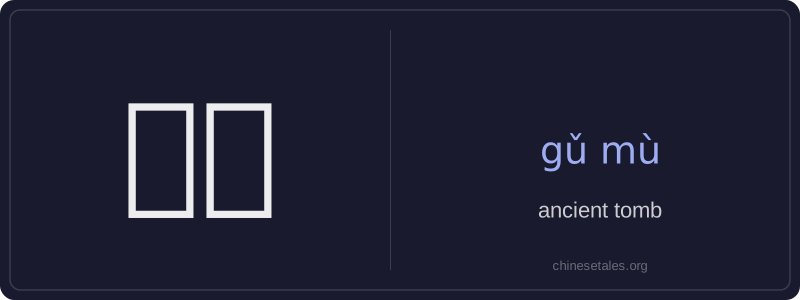
古墓 literally means 'ancient tomb' — 古 (gǔ) means 'ancient' or 'old', and 墓 (mù) means 'tomb' or 'grave'. Together, they refer specifically to burial sites from historical periods, especially those dating back to dynasties like the Han, Tang, or Ming. These tombs are often discovered during archaeological excavations and may contain artifacts, murals, or inscriptions of great cultural significance.
古墓 is commonly used in academic, historical, and journalistic contexts — for example, when reporting on archaeological finds or describing heritage sites. It carries a formal, respectful tone and is rarely used for ordinary graves or modern cemeteries. In popular culture, 古墓 also appears in novels and films (e.g., *The Lost Tomb* series), where it evokes mystery and antiquity — but even there, it retains its core meaning of an old, historically significant burial structure.
Example Sentences
Related Words
国语
‘Guó yǔ’ literally means 'national language'—
无论谁
‘无论谁’ (wú lùn shéi) is a pronoun meaning
外语
‘外语’ literally means ‘outside language’ —
不对
不对 (bù duì) literally combines 不 (bù), meani
我的
我的 (wǒ de) is a possessive pronoun meaning 'my'
违规
违规 (wéi guī) literally means 'to violate rules
亲笔
‘亲笔’ literally means ‘one’s own hand’—comb
面条
‘面条’ (miàn tiáo) literally means ‘flour str