Word Explanation
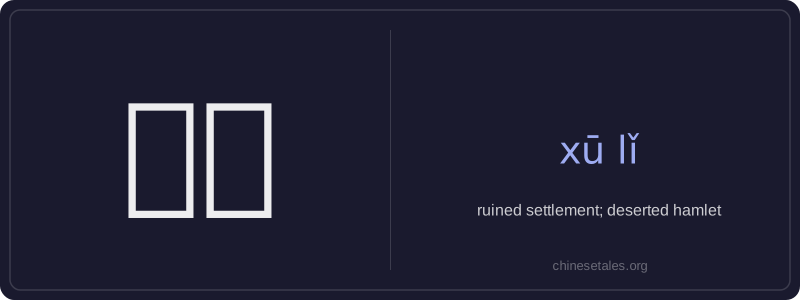
墟里 (xū lǐ) is a literary and poetic noun meaning 'ruined settlement' or 'deserted hamlet' — a small rural community abandoned long ago, often overgrown and silent. The character 墟 (xū) originally referred to a market place or a site of former human activity, but in classical and modern literary usage, it evokes decay, abandonment, and quiet desolation. The character 里 (lǐ) means 'village' or 'neighborhood', historically denoting a basic administrative unit in ancient China. Together, 墟里 conveys not just physical ruins, but a sense of historical erasure and melancholy stillness — commonly found in poetry, essays, and descriptive prose about forgotten countryside locations.
This term carries strong aesthetic and emotional weight; it is rarely used in everyday speech or news reporting. Instead, it appears in contexts evoking nostalgia, historical reflection, or the passage of time — especially when describing landscapes where nature has reclaimed human dwellings. It is more evocative and solemn than neutral terms like 村子 (cūnzi, 'village') or 废墟 (fèixū, 'ruins'), and often implies rural, pre-modern abandonment rather than recent destruction.
Example Sentences
Related Words
国语
‘Guó yǔ’ literally means 'national language'—
无论谁
‘无论谁’ (wú lùn shéi) is a pronoun meaning
外语
‘外语’ literally means ‘outside language’ —
不对
不对 (bù duì) literally combines 不 (bù), meani
我的
我的 (wǒ de) is a possessive pronoun meaning 'my'
违规
违规 (wéi guī) literally means 'to violate rules
亲笔
‘亲笔’ literally means ‘one’s own hand’—comb
面条
‘面条’ (miàn tiáo) literally means ‘flour str