Word Explanation
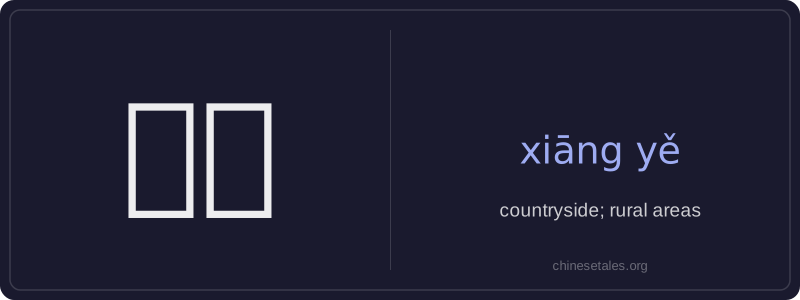
乡野 literally combines 乡 (xiāng), meaning 'hometown' or 'rural village', and 野 (yě), meaning 'wilderness' or 'open countryside'. Together, they evoke a broad, rustic landscape beyond urban centers—fields, hills, small villages, and uncultivated land. Unlike the more neutral term 农村 (nóngcūn, 'agricultural village'), 乡野 carries a poetic, slightly literary tone and often suggests natural simplicity, quietness, and distance from modern life.
This word is commonly used in descriptive writing, travel narratives, and cultural discussions about traditional Chinese life. It rarely appears in formal administrative contexts (where terms like 乡村 or 农村 are preferred) but frequently appears in literature, essays, and spoken expressions emphasizing authenticity, tranquility, or nostalgia for rural roots. It may also imply a contrast with city life—less developed, less crowded, and closer to nature.
Example Sentences
Related Words
国语
‘Guó yǔ’ literally means 'national language'—
无论谁
‘无论谁’ (wú lùn shéi) is a pronoun meaning
外语
‘外语’ literally means ‘outside language’ —
不对
不对 (bù duì) literally combines 不 (bù), meani
我的
我的 (wǒ de) is a possessive pronoun meaning 'my'
违规
违规 (wéi guī) literally means 'to violate rules
亲笔
‘亲笔’ literally means ‘one’s own hand’—comb
面条
‘面条’ (miàn tiáo) literally means ‘flour str