Word Explanation
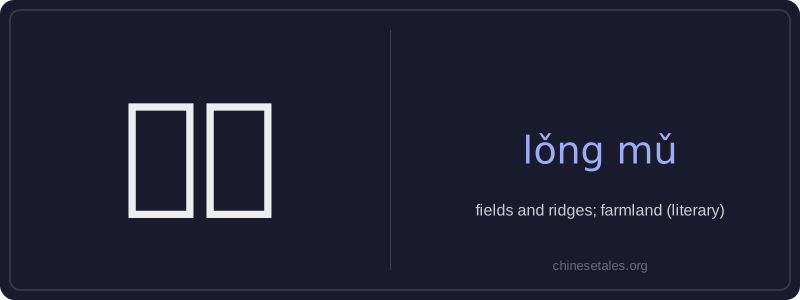
'Lǒng mǔ' is a literary, classical compound noun meaning 'farmland' or 'cultivated fields,' emphasizing the physical layout of agricultural land—specifically raised ridges (lǒng) and measured plots (mǔ). The character 垄 refers to earthen ridges built between rows of crops to improve drainage and aeration; 亩 is an ancient unit of land area (≈667 m²), historically used to denote cultivated plots. Together, they evoke traditional agrarian imagery and are rarely heard in everyday speech.
This term appears mainly in poetry, historical texts, and formal writing to convey rustic simplicity, rural life, or the dignity of farming. It carries a nostalgic, elevated tone—similar to English phrases like 'the furrows and fields' or 'the tillable earth.' Unlike modern terms like 农田 (nóngtián) or 田野 (tiányě), 垄亩 is deliberately archaic and evocative, often paired with verbs like 归隐 (to retire to seclusion) or 耕作 (to cultivate).
Example Sentences
Related Words
国语
‘Guó yǔ’ literally means 'national language'—
无论谁
‘无论谁’ (wú lùn shéi) is a pronoun meaning
外语
‘外语’ literally means ‘outside language’ —
不对
不对 (bù duì) literally combines 不 (bù), meani
我的
我的 (wǒ de) is a possessive pronoun meaning 'my'
违规
违规 (wéi guī) literally means 'to violate rules
亲笔
‘亲笔’ literally means ‘one’s own hand’—comb
面条
‘面条’ (miàn tiáo) literally means ‘flour str