Word Explanation
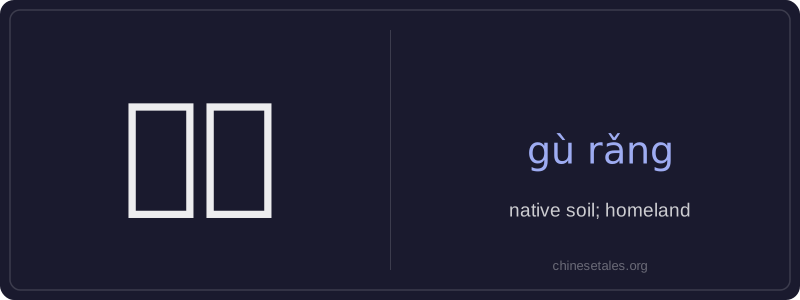
‘故壤’ literally combines ‘故’ (gù), meaning ‘former,’ ‘old,’ or ‘native,’ and ‘壤’ (rǎng), meaning ‘soil,’ ‘earth,’ or ‘land.’ Together, they evoke a poetic, literary term for one’s ancestral or native land — not just geographic territory, but the soil imbued with family roots, cultural memory, and emotional belonging. It carries strong connotations of nostalgia, identity, and reverence for origin.
This word is rarely used in casual speech; it appears most often in classical poetry, formal essays, historical narratives, or speeches about heritage and patriotism. Unlike more common terms like ‘家乡’ (jiāxiāng) or ‘祖国’ (zǔguó), ‘故壤’ emphasizes the physical earth itself as a symbol of continuity and belonging — evoking images of farmland, rivers, and mountains passed down through generations. Its tone is solemn and elevated, making it unsuitable for everyday conversation or informal writing.
Example Sentences
Related Words
国语
‘Guó yǔ’ literally means 'national language'—
无论谁
‘无论谁’ (wú lùn shéi) is a pronoun meaning
外语
‘外语’ literally means ‘outside language’ —
不对
不对 (bù duì) literally combines 不 (bù), meani
我的
我的 (wǒ de) is a possessive pronoun meaning 'my'
违规
违规 (wéi guī) literally means 'to violate rules
亲笔
‘亲笔’ literally means ‘one’s own hand’—comb
面条
‘面条’ (miàn tiáo) literally means ‘flour str