Word Explanation
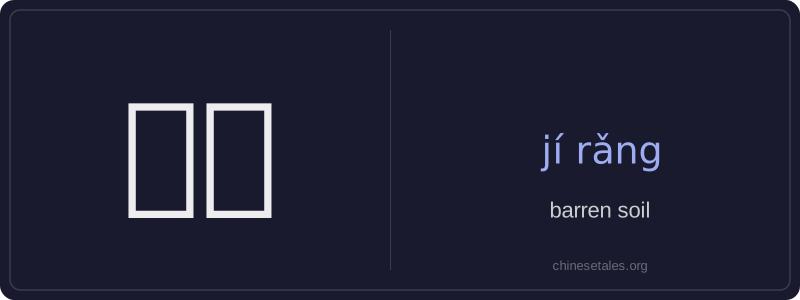
瘠壤 literally means 'thin/weak soil' — 瘠 (jí) means 'barren', 'lean', or 'infertile', often describing land lacking nutrients or vitality; 壤 (rǎng) means 'soil' or 'earth'. Together, they form a formal, literary term for soil that is poor in organic matter and nutrients, unable to support robust plant growth. It’s commonly used in ecological, agricultural, or geographical contexts when discussing land degradation, desertification, or sustainable farming challenges.
Unlike everyday terms like 贫瘠的土地 (pín jí de tǔ dì), 瘠壤 is concise and elevated in register — it appears more often in written reports, academic papers, or official policy documents than in casual speech. The word carries a slightly somber or technical tone, emphasizing natural limitation rather than temporary conditions like drought. It may also appear in classical or poetic descriptions of desolate landscapes, where the barrenness reflects broader themes of hardship or resilience.
Example Sentences
Related Words
国语
‘Guó yǔ’ literally means 'national language'—
无论谁
‘无论谁’ (wú lùn shéi) is a pronoun meaning
外语
‘外语’ literally means ‘outside language’ —
不对
不对 (bù duì) literally combines 不 (bù), meani
我的
我的 (wǒ de) is a possessive pronoun meaning 'my'
违规
违规 (wéi guī) literally means 'to violate rules
亲笔
‘亲笔’ literally means ‘one’s own hand’—comb
面条
‘面条’ (miàn tiáo) literally means ‘flour str