Word Explanation
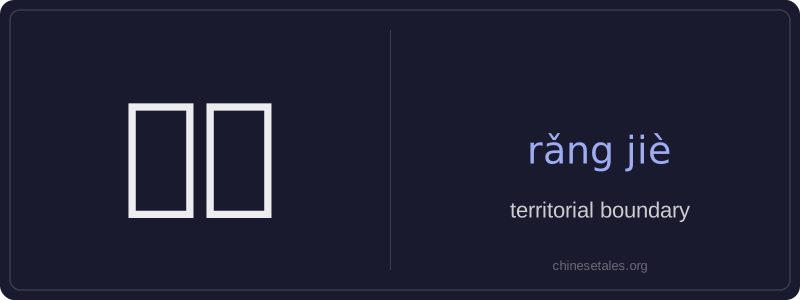
壤界 (rǎng jiè) literally combines 壤 (rǎng), meaning 'soil' or 'land', and 界 (jiè), meaning 'boundary' or 'limit'. Together, it refers to a territorial boundary—especially one defined by natural land features such as rivers, mountains, or soil types—rather than purely political or administrative lines. It emphasizes the physical, geographical basis of a border, often used in contexts involving ecology, geography, or historical land demarcation.
This term carries a formal, somewhat literary or technical tone and appears frequently in academic writing, environmental reports, or discussions about regional ecosystems and habitat ranges. While less common in everyday conversation than 边界 (biānjiè) or 国界 (guójiè), 壤界 is precise when highlighting how terrain itself shapes jurisdiction or ecological zones—such as where soil composition changes across a region, marking a transition between distinct biomes or animal habitats.
Example Sentences
Related Words
国语
‘Guó yǔ’ literally means 'national language'—
无论谁
‘无论谁’ (wú lùn shéi) is a pronoun meaning
外语
‘外语’ literally means ‘outside language’ —
不对
不对 (bù duì) literally combines 不 (bù), meani
我的
我的 (wǒ de) is a possessive pronoun meaning 'my'
违规
违规 (wéi guī) literally means 'to violate rules
亲笔
‘亲笔’ literally means ‘one’s own hand’—comb
面条
‘面条’ (miàn tiáo) literally means ‘flour str