Word Explanation
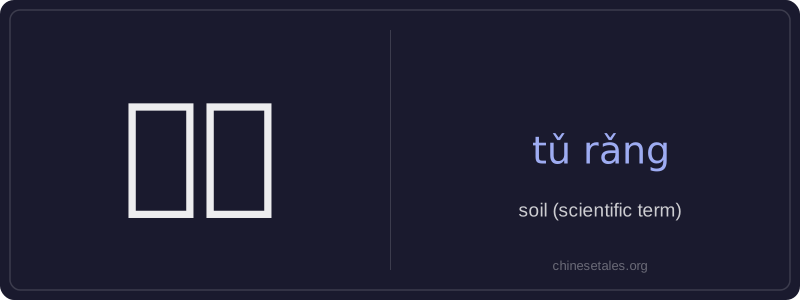
土壤 (tǔ rǎng) is the formal, scientific term for 'soil' — the upper layer of earth in which plants grow. It consists of mineral particles, organic matter, water, air, and microorganisms. The character 土 means 'earth' or 'soil' and conveys the basic material; 壤 means 'loam' or 'fertile land', emphasizing texture and agricultural suitability. Together, they form a precise, technical compound used in ecology, agriculture, geology, and environmental science — not in casual speech.
This word appears frequently in academic texts, government reports on land conservation, and discussions about sustainable farming. Unlike the more general or colloquial 土 (tǔ), which can mean 'dirt', 'land', or even 'local/vernacular', 土壤 carries no informal or metaphorical meanings — it refers strictly to the physical, biologically active medium supporting plant life and ecosystem functions.
Example Sentences
Related Words
国语
‘Guó yǔ’ literally means 'national language'—
无论谁
‘无论谁’ (wú lùn shéi) is a pronoun meaning
外语
‘外语’ literally means ‘outside language’ —
不对
不对 (bù duì) literally combines 不 (bù), meani
我的
我的 (wǒ de) is a possessive pronoun meaning 'my'
违规
违规 (wéi guī) literally means 'to violate rules
亲笔
‘亲笔’ literally means ‘one’s own hand’—comb
面条
‘面条’ (miàn tiáo) literally means ‘flour str