Word Explanation
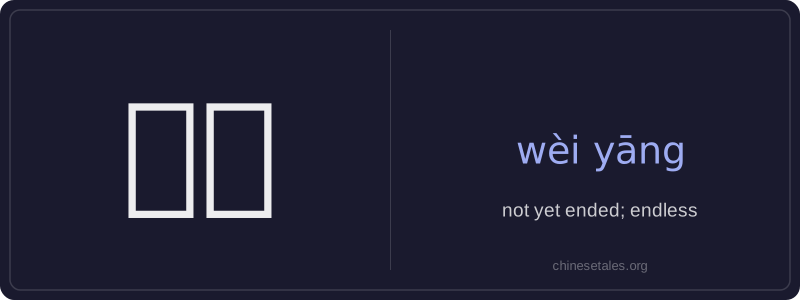
‘未央’ is a classical Chinese compound meaning ‘not yet ended’ or ‘endless’, often conveying a sense of lingering, unresolved feeling—especially in poetic or literary contexts. The character 未 means ‘not yet’ or ‘not’, while 央 means ‘center’ but in ancient usage also carries the sense of ‘end’, ‘completion’, or ‘cessation’. Together, they form an elegant, slightly archaic expression suggesting something that continues without reaching its conclusion—like unfulfilled longing, persistent sorrow, or enduring beauty.
This term appears frequently in classical poetry, song lyrics, and modern literary prose to evoke emotional depth and timelessness. It’s rarely used in casual speech but remains common in written language, titles of artworks, names of places (e.g., Weiyang District in Xi’an), and emotive expressions like ‘未央的思念’ (endless yearning). Its tone is lyrical and refined, not neutral or colloquial.
Example Sentences
Related Words
国语
‘Guó yǔ’ literally means 'national language'—
无论谁
‘无论谁’ (wú lùn shéi) is a pronoun meaning
外语
‘外语’ literally means ‘outside language’ —
不对
不对 (bù duì) literally combines 不 (bù), meani
我的
我的 (wǒ de) is a possessive pronoun meaning 'my'
违规
违规 (wéi guī) literally means 'to violate rules
亲笔
‘亲笔’ literally means ‘one’s own hand’—comb
面条
‘面条’ (miàn tiáo) literally means ‘flour str