Word Explanation
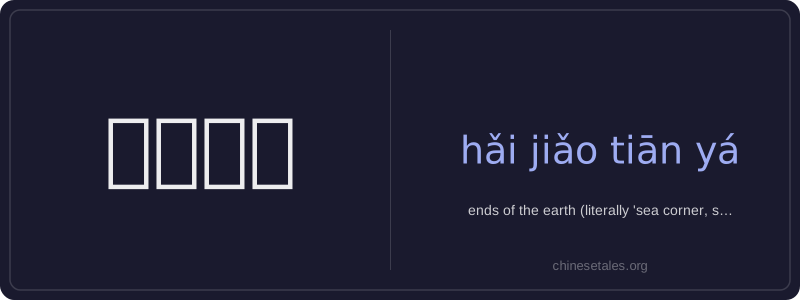
‘海角天涯’ is a poetic, literary idiom meaning ‘the farthest ends of the earth’—a place so remote it lies at the corner of the sea and the edge of the sky. Each character contributes to this sense of extreme distance: 海 (sea) and 天 (sky) represent the vastest natural boundaries, while 角 (corner) and 涯 (edge or rim) emphasize remoteness and extremity. Together, they evoke boundlessness and separation, often implying emotional or physical distance beyond ordinary reach.
This phrase appears frequently in classical poetry, modern literature, and formal speech to express profound longing, exile, or the idea of being utterly far away—whether geographically or existentially. It’s not used in casual daily conversation but carries strong rhetorical weight in writing, speeches, or lyrical contexts. Though literally picturing geography, its power lies in metaphor: the ‘ends of the earth’ are less about location than about human experience of isolation, yearning, or irrevocable parting.
Example Sentences
Related Words
国语
‘Guó yǔ’ literally means 'national language'—
无论谁
‘无论谁’ (wú lùn shéi) is a pronoun meaning
外语
‘外语’ literally means ‘outside language’ —
不对
不对 (bù duì) literally combines 不 (bù), meani
我的
我的 (wǒ de) is a possessive pronoun meaning 'my'
违规
违规 (wéi guī) literally means 'to violate rules
亲笔
‘亲笔’ literally means ‘one’s own hand’—comb
面条
‘面条’ (miàn tiáo) literally means ‘flour str