Word Explanation
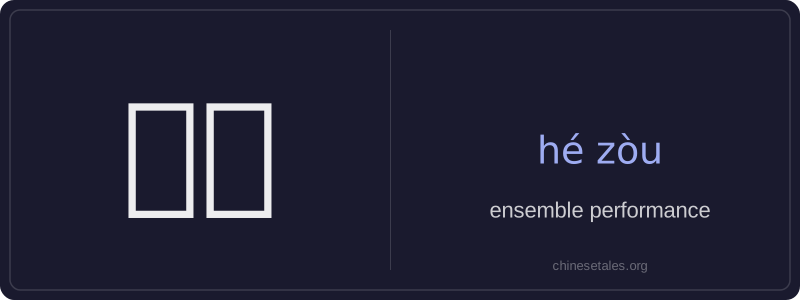
'Hé zòu' literally combines 'hé' (to join, unite, harmonize) and 'zòu' (to play music), meaning a coordinated musical performance by multiple musicians—such as an orchestra, chamber group, or band. Unlike solo performance (独奏), 合奏 emphasizes collective interpretation, balance, and interplay among instruments or voices.
This term is widely used in classical, traditional Chinese, and contemporary ensemble settings. It appears in contexts like school music programs, professional concerts, and cultural festivals. While often associated with instrumental groups, it can also refer to vocal ensembles when specified (e.g., 合唱 for choral singing). The word carries a formal, artistic connotation and is rarely used for casual jam sessions—those are more commonly called 即兴演奏 or jam session in colloquial speech.
Example Sentences
Related Words
国语
‘Guó yǔ’ literally means 'national language'—
无论谁
‘无论谁’ (wú lùn shéi) is a pronoun meaning
外语
‘外语’ literally means ‘outside language’ —
不对
不对 (bù duì) literally combines 不 (bù), meani
我的
我的 (wǒ de) is a possessive pronoun meaning 'my'
违规
违规 (wéi guī) literally means 'to violate rules
亲笔
‘亲笔’ literally means ‘one’s own hand’—comb
面条
‘面条’ (miàn tiáo) literally means ‘flour str